
New
Reliable Online Course Support for Busy Students
- New York, United States
Strategies, Reviews & Tools For Small Business
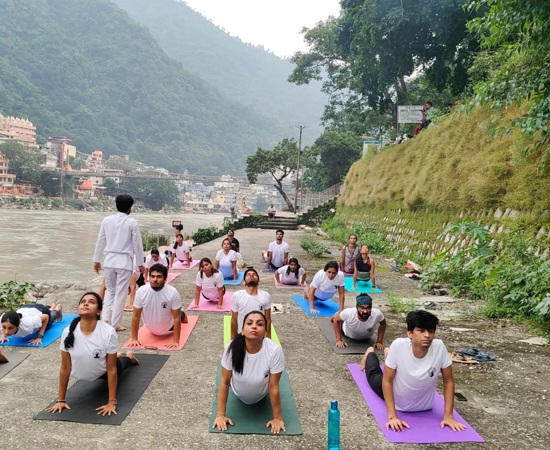
Yoga is much more than a collection of physical postures. For many practitioners, it becomes a path toward greater awareness, discipline, balance, and self-understanding. Once the foundations of yoga have been established through regular practice or a foundational teacher-training course, the natural next step is often to explore the subject in greater depth. This is where a 300 Hour Yoga TTC in Rishikesh can become a meaningful part of a practitioner’s personal and professional journey.
A 300 Hour program is generally designed as an advanced continuation of foundational yoga education. According to Yoga Alliance’s current RYS 300 standards, an advanced 300 Hour training is intended to build upon fundamental concepts learned at the 200-hour level and develop more detailed and subtle knowledge of yoga practice and teaching. Its educational areas include techniques and practice, teaching methodology, anatomy and physiology, yoga philosophy and ethics, and practicum.
Rishikesh adds another dimension to this learning experience. Located in northern India near the Himalayan foothills and the Ganges, the city has developed a strong association with yoga, meditation, spiritual study, and traditional Indian practices. For someone looking to immerse themselves in yoga rather than simply attend classes for a few hours a week, the environment can provide an especially focused setting.
Here are some of the top reasons to consider enrolling in a 300 Hour Yoga TTC in Rishikesh.
One of the biggest reasons to choose a 300 Hour course is the opportunity to move beyond introductory concepts.
A foundational yoga teacher training usually introduces students to essential asanas, basic anatomy, teaching principles, pranayama, meditation, and yoga philosophy. An advanced program can revisit these subjects from a more detailed perspective.
Instead of simply learning how to perform a posture, students may explore questions such as:
Why is a particular alignment important?
How can an asana be modified for different bodies?
How should a sequence be structured?
What are the contraindications of a posture?
How can breath influence a practice?
How can philosophical principles be incorporated into teaching?
This deeper approach can help transform theoretical knowledge into practical understanding.
Being able to practice yoga and being able to teach it effectively are two different abilities.
A good teacher needs to communicate clearly, observe students, create appropriate sequences, provide useful modifications, and maintain a safe learning environment. A 300 Hour program gives practitioners additional time to develop these skills through demonstrations, practice teaching, feedback, and observation.
Teaching methodology and practicum are specifically included within Yoga Alliance’s RYS 300 educational categories.
With regular teaching practice, students can become more comfortable with giving verbal instructions, demonstrating techniques, correcting alignment, and adapting sessions according to different levels of experience.
Another major attraction is the opportunity to study yoga in India.
Rishikesh is internationally associated with yoga and spiritual learning. Living and studying there can allow students to experience yoga beyond the classroom. Daily routines may include meditation, chanting, traditional practices, philosophical discussions, and time for personal reflection.
The experience can be quite different from attending a weekend workshop or completing an online course. Instead of separating yoga from everyday life, students have the opportunity to make it part of their daily routine.
For many practitioners, this immersion is one of the most memorable aspects of completing a 300 Hour Yoga Teacher Training in Rishikesh.
Physical practice represents only one aspect of yoga.
Advanced teacher training can provide more time to explore the philosophical foundations behind the practice. Depending on the school and curriculum, students may study concepts from classical yoga philosophy and texts such as the Yoga Sutras and Bhagavad Gita.
The purpose is not simply to memorize philosophical terms. Instead, students can explore how ideas such as discipline, self-awareness, ethical conduct, concentration, and mindfulness relate to modern life.
This understanding can also improve teaching. When a teacher understands the philosophy behind a practice, they can communicate yoga as a holistic discipline rather than presenting it exclusively as physical exercise.
Anatomy and physiology are essential areas of advanced yoga education.
A teacher may work with students who have different levels of flexibility, strength, mobility, age, and physical experience. Understanding how the body moves can help teachers make more informed decisions when designing classes.
A 300 Hour course can provide opportunities to study subjects such as:
Functional movement
Musculoskeletal anatomy
Joint mobility
Postural alignment
Injury prevention
Breathing mechanics
Safe modifications
Individual differences in movement
This knowledge is particularly valuable for teachers who want to create inclusive and responsible yoga classes.
A 300 Hour program generally provides more room for advanced practice than a foundational course.
Students may explore more challenging variations of asanas, refined alignment techniques, transitions, pranayama practices, meditation methods, mudras, bandhas, or other traditional practices, depending on the school’s curriculum. Some Rishikesh programs combine Hatha, Ashtanga, and Vinyasa approaches with advanced breathing and meditation practices.
The purpose should not simply be to perform difficult postures. Advanced practice is also about developing awareness, control, patience, and understanding.
In this sense, the real progression is not always from an easy pose to a difficult pose. It can also be from simply performing a practice to understanding why, when, and how it should be practiced.
Teacher training should not be viewed only as career preparation.
A strong 300 Hour program can also encourage practitioners to examine their own habits, limitations, strengths, and relationship with yoga.
Longer periods of consistent practice can help students observe how their body responds to different techniques and how their mental state changes throughout the training.
This personal experience can later influence teaching. A teacher who has experienced the challenges of maintaining discipline, dealing with uncertainty, and developing patience may be better prepared to support students going through similar experiences.