New
Global Institute of Cyber Security | Cyber Security, Ethical Hacking & IT Training Institute in Dehradun
- 2nd Floor, 16-A, Subhash Rd, opposite Hotel pacific, above Archies gallery, Irigation Colony, Karanp
- 07249988011
Strategies, Reviews & Tools For Small Business
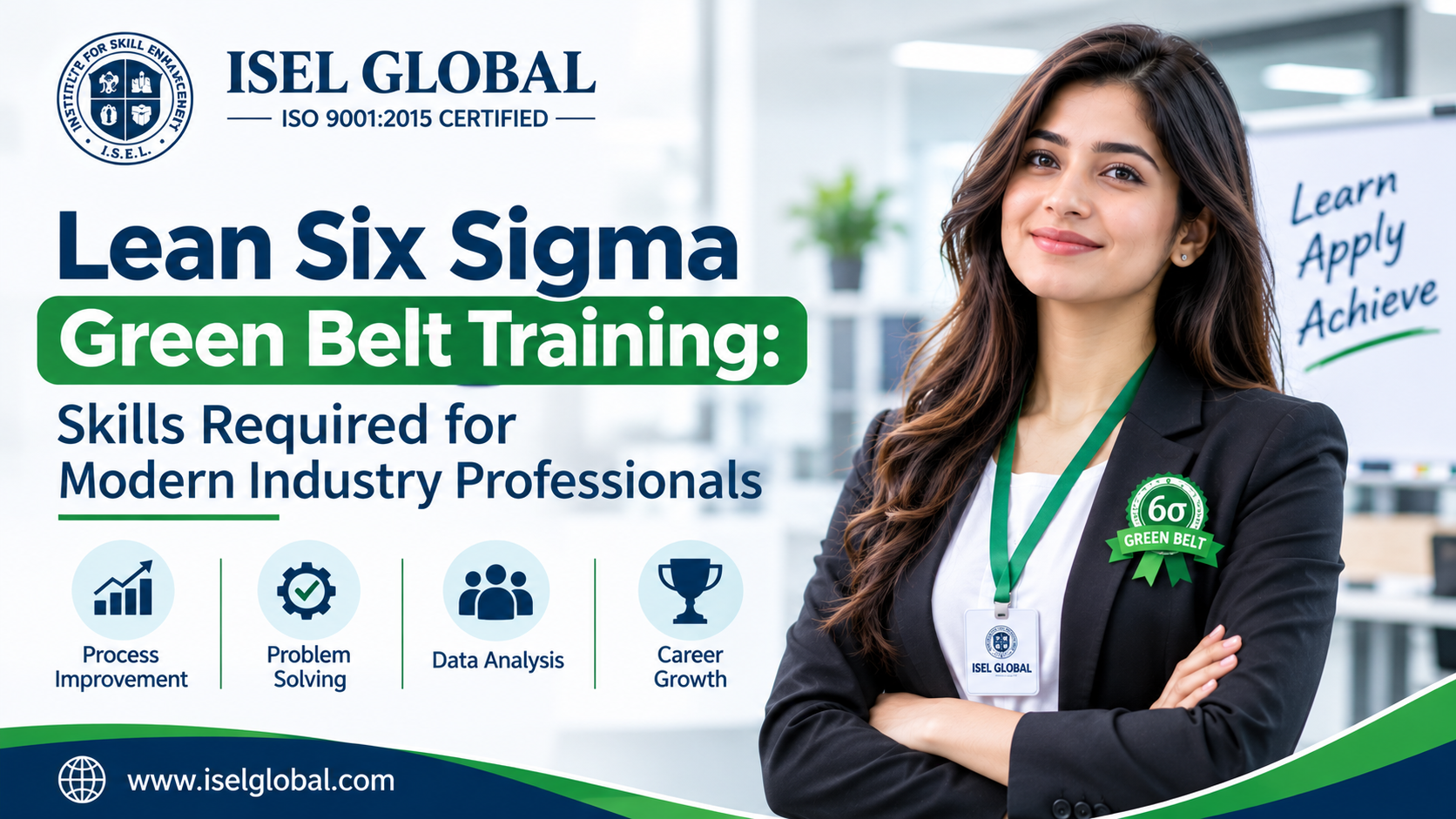
Industries today need professionals who can solve problems, improve processes, control costs, and deliver consistent results. Lean Six Sigma Green Belt Training helps professionals develop these practical skills by teaching them how to identify inefficiencies, analyse data, and improve the way work gets done. Whether you work in manufacturing, IT, quality management, healthcare, or operations, these skills can support your professional growth.
For engineers, working professionals, project managers, and students, learning Lean Six Sigma Certification concepts can provide a structured approach to workplace problem-solving and continuous improvement.
Lean Six Sigma Green Belt Training teaches professionals how to improve processes by reducing waste, identifying the causes of defects, and using data to make better decisions. It combines Lean principles, which focus on eliminating unnecessary activities, with Six Sigma methods for reducing variation and improving quality.
A lean six sigma green belt professional typically works on improvement projects within a team or department. For example, a manufacturing engineer might use process data to investigate why products fail inspection, while an IT professional could analyse recurring service delays.
Businesses need employees who can connect day-to-day operations with measurable improvements. lean six sigma certification provides a framework for investigating problems rather than relying only on assumptions.
Professionals can use these methods to:
The approach is useful across industries because almost every organisation has processes that can be measured, reviewed, and improved.
A Green Belt programme can help you develop technical and professional skills that are useful in real workplace situations.
You learn to distinguish the actual cause of a problem from its visible symptoms. Tools such as the 5 Whys and cause-and-effect diagrams help teams investigate recurring issues systematically.
Professionals learn to collect relevant data, understand process performance, and use basic statistical techniques to support decisions. These skills are particularly useful when quality or productivity problems cannot be explained by observation alone.
Lean methods help identify unnecessary movement, waiting, excess inventory, and other activities that do not add value. A six sigma green belt professional can use process mapping to understand where time and resources are being lost.
Improvement projects require clear objectives, timelines, responsibilities, and communication. Green Belt training can help professionals coordinate with colleagues, monitor progress, and present findings to managers.
The curriculum varies by provider, but a typical lean six sigma programme introduces the DMAIC improvement method: Define, Measure, Analyse, Improve, and Control.
Common learning areas include:
Training may also cover process mapping, basic statistics, quality tools, and project documentation. Before enrolling, review the syllabus, practical exercises, assessment requirements, and certification criteria.
This training can suit working professionals, engineers, quality specialists, manufacturing employees, IT professionals, project managers, and students interested in process improvement. Previous experience may be useful for applying the concepts, but eligibility requirements depend on the training provider.
Professionals who want to progress later may also explore a six sigma black belt course or advanced black belt certification after building the relevant knowledge and project experience.
Green Belt knowledge can complement roles involving quality, operations, production, service delivery, and project coordination. Depending on your qualifications and experience, relevant roles may include:
Some professionals later pursue six sigma black belt training or a lean six sigma black belt qualification to prepare for more complex projects and leadership responsibilities. A lean six sigma black belt certification may be worth considering when your career goals require deeper analytical and project leadership skills.
There is no single salary figure for Green Belt professionals because compensation depends on location, experience, industry, job responsibilities, and technical expertise. Certification alone does not guarantee a salary increase.
When evaluating career opportunities, compare current job descriptions, required experience, and salary ranges for your target role. Professionals who combine improvement methods with strong communication, data analysis, and relevant industry knowledge may be better positioned to demonstrate their value to employers.
The right programme depends on your current experience and career goals. Beginners may start with Green Belt training, while experienced professionals leading complex improvement projects may consider advanced qualifications.
If you are comparing six sigma certification in india, examine the curriculum, practical learning, assessment process, trainer expertise, and recognition relevant to your industry. You can also review ISEL Global’s Six Sigma Certification Online India programme.
For location-specific options, explore six sigma certification in Mumbai and the six sigma black belt certification in Bangalore page. Please verify the Bangalore page URL before publishing because the supplied slug spells the city as “banglore.”
Professionals comparing advanced options can review ISEL Global’s best six sigma black belt certification in india page and its six sigma black belt certification programme. Those considering Six Sigma and black belt pathways should compare the responsibilities and prerequisites associated with each level.
For experienced practitioners, a master black belt or six sigma master black belt programme may be relevant, depending on the provider’s requirements and the professional’s experience.
Learners sometimes focus only on passing the assessment and overlook practical application. Other common mistakes include collecting poor-quality data, choosing projects that are too broad, and implementing changes without checking the results.
To get more value from training, choose a manageable problem, involve the people who understand the process, and measure performance before and after making changes. Keep records of the methods used and the results achieved.
Start with a clearly defined problem and agree on what success will look like. Use reliable data, involve relevant team members, and test proposed changes before implementing them widely. After an improvement, continue monitoring the process to ensure the results last.
Learning resources can support your progress, too. A useful six sigma book or six sigma ebook can help you revise concepts, but practical exercises and real project experience are important for developing confidence.
Lean Six Sigma Green Belt Training can help modern industry professionals build practical problem-solving, data analysis, and process improvement skills. It offers a structured way to understand workplace challenges and contribute to measurable improvements. The best results come when learners apply the methods to real situations rather than treating certification as the final goal.
If you are ready to strengthen your process improvement knowledge, explore ISEL Global’s training options and choose a programme that aligns with your experience and career plans.
Lean Six Sigma Green Belt Training teaches professionals how to identify process problems, analyse data, reduce waste, and improve quality. It commonly covers the DMAIC method and practical tools for root cause analysis. The training is useful for people working in quality, manufacturing, operations, IT, and other areas where process performance matters. Course content and certification requirements vary by provider.
Eligibility depends on the training provider. Many programmes are suitable for working professionals, engineers, quality specialists, project managers, and students interested in process improvement. Some courses may recommend prior work experience or basic knowledge of business processes. Before enrolling, review the entry requirements, course syllabus, assessment format, and whether a project or examination is required to earn the certificate.
Useful skills include problem-solving, data interpretation, process mapping, root cause analysis, communication, and teamwork. Green Belt professionals should be able to define a problem, collect reliable information, investigate possible causes, and assess whether a change improves performance. Statistical knowledge can be helpful, but the depth required depends on the course and the type of improvement projects the professional handles.
The duration varies according to the provider, delivery format, and course depth. Some programmes use intensive sessions, while others offer self-paced online learning or scheduled classes over a longer period. Time for assignments, revision, assessments, and project work may add to the overall commitment. Check the course schedule and certification requirements before choosing a programme that fits your work or study routine.
Many Green Belt programmes welcome learners who are new to formal process improvement. Beginners can benefit from understanding basic business processes and being willing to work with data. A course with clear explanations, practical examples, and guided exercises may make the concepts easier to apply. However, check the provider’s eligibility rules and consider whether an introductory course would be a better starting point.
Green Belt knowledge can complement careers in quality assurance, manufacturing, operations, process improvement, project coordination, and service delivery. It may help candidates demonstrate structured problem-solving skills, but employment depends on experience, qualifications, and the employer’s requirements. Reviewing job advertisements in your target industry is a practical way to identify which tools, technical skills, and certification levels are most relevant.
Online training can be a practical option for people balancing work, study, and personal commitments. Its value depends on the course content, trainer support, assessment standards, practical exercises, and relevance to your goals. Compare these factors rather than choosing a course based only on price or duration. Confirm what the certificate represents and whether the learning format suits your needs.
Green Belt training generally focuses on contributing to process improvement projects and applying core tools within a team or department. Black Belt programmes typically cover more advanced analysis, complex projects, and greater responsibility for leading improvement initiatives. Exact differences vary by provider. Before progressing, compare prerequisites, curriculum depth, assessment requirements, and the type of projects expected at each level.