
New
The Academy for First Aid and Safety
- 3250 Bloor Street West, Suite 501, Etobicoke, ON M8X 2X9, Canada
- 905-884-6036
Strategies, Reviews & Tools For Small Business
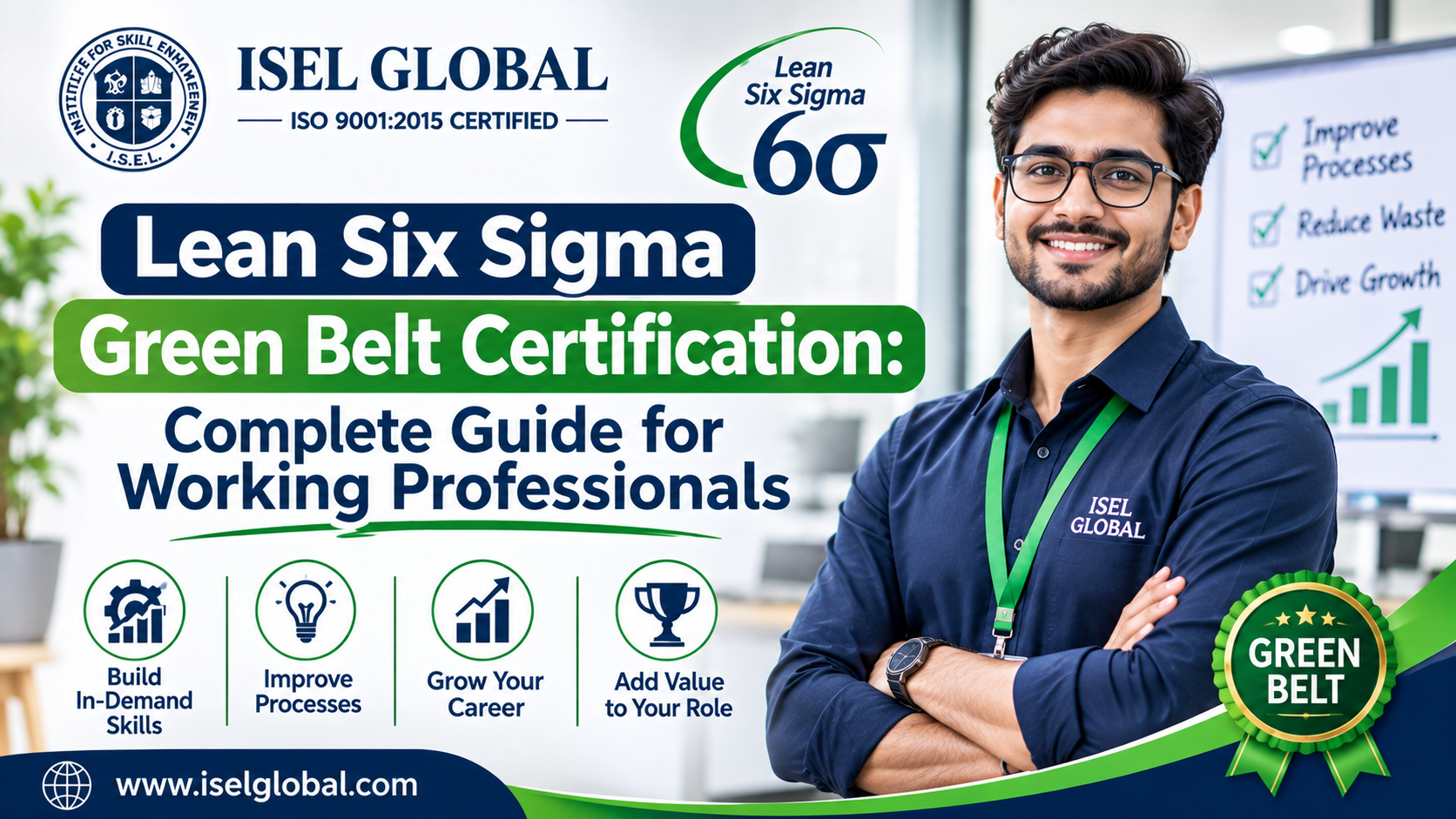
In today’s competitive business environment, companies need professionals who can improve processes, reduce operational costs and deliver better results. Lean Six Sigma Certification helps working professionals develop these abilities through structured problem-solving methods and data-driven decision-making.
A Lean Six Sigma Green Belt is a valuable qualification for engineers, quality professionals, project managers and employees working in manufacturing, IT, healthcare and business operations. It provides practical knowledge of process improvement and helps professionals contribute to measurable business results.
Whether you want to improve your current performance or explore new career opportunities, understanding this certification can help you make an informed decision.
Lean Six Sigma Green Belt Certification is a professional qualification that teaches individuals how to identify process inefficiencies, analyse performance problems and implement improvements. It combines Lean principles, which eliminate waste, with Six Sigma techniques, which reduce defects and process variation.
Green Belt professionals generally participate in improvement projects, work with cross-functional teams and use structured methods to improve productivity, quality and customer satisfaction.
Lean Six Sigma+ remains relevant in 2026 because organisations are increasingly focused on96. operational efficiency, automation, customer experience and measurable business performance.
Companies want professionals who can identify the reasons behind recurring problems rather than simply manage daily tasks.
This certification helps professionals:
For professionals exploring Six Sigma Certification in India, Green Belt training offers a structured way to develop practical process improvement knowledge.
A Green Belt qualification can support professional development by combining analytical knowledge with practical business applications.
Major benefits include:
Lean Six Sigma Green Belt Training is suitable for working professionals, engineers, quality specialists, manufacturing employees, IT professionals, project managers and business leaders.
Students and fresh graduates can also consider learning these concepts to build a foundation in quality management and process improvement.
Previous experience in quality management can be helpful, but eligibility requirements depend on the training provider and certification programme.
A Green Belt programme develops technical and professional skills that can be applied to real workplace challenges.
Important learning areas include:
For example, a manufacturing professional may use these methods to investigate recurring production defects. An IT professional might apply them to reduce software delivery delays or improve customer support response times.
A structured Green Belt curriculum generally introduces the DMAIC methodology: Define, Measure, Analyse, Improve and Control.
| Module | Topics Covered |
| Define | Project selection, problem statements and customer requirements |
| Measure | Data collection, process mapping and baseline measurement |
| Analyse | Root cause analysis and statistical techniques |
| Improve | Solution development and process optimisation |
| Control | Monitoring, standardisation and sustaining improvements |
The curriculum may also include Lean principles, quality management concepts, practical exercises and project-based learning. Actual modules depend on the training provider.
Green Belt knowledge can support career opportunities in several professional areas.
Potential roles include:
Professionals who want to handle larger projects and lead complex improvement initiatives may later consider advanced qualifications such as six sigma black belt certification.
The best learning path depends on your experience, career objectives and the responsibilities you want to take on.
Six Sigma-related salaries vary according to experience, job responsibilities, industry, location and technical expertise. Certification alone does not guarantee a particular salary or promotion.
Professionals working in quality management, operations, manufacturing and process improvement may find opportunities to increase their earning potential as they gain practical experience and demonstrate measurable results.
When evaluating career opportunities, consider the following factors:
Lean Six Sigma techniques are useful wherever organisations need consistent processes, better quality and improved efficiency.
Major industries include:
Some professionals focus only on completing the certification instead of understanding how to apply its concepts.
Avoid these common mistakes:
To gain practical value from your learning, connect theoretical concepts with real workplace challenges.
Start by identifying a process that needs improvement. Understand its current performance, collect relevant data, investigate the underlying causes and develop measurable solutions.
Continue learning through practical assignments, case studies and professional development resources. A six sigma book or six sigma ebook can also help reinforce important concepts during your preparation.
Lean Six Sigma Green Belt Certification is a valuable learning opportunity for professionals who want to strengthen their problem-solving, analytical and process improvement skills. It provides a structured understanding of DMAIC, waste reduction and quality management that can be applied across multiple industries.
For professionals considering Lean Six Sigma Certification, choosing a suitable programme is an important first step. Evaluate the curriculum, practical learning opportunities, certification requirements and relevance to your career goals.
With the right training and practical experience, Green Belt knowledge can become a strong foundation for long-term professional development.
Lean Six Sigma Green Belt Certification is a professional qualification that teaches process improvement, waste reduction, root cause analysis and data-driven problem-solving. Certified professionals learn how to participate in improvement projects and support organisations in improving productivity, quality and operational efficiency.
Yes, it can be valuable for professionals working in quality, manufacturing, IT, healthcare and operations. It develops practical analytical and problem-solving abilities that organisations use to improve business processes. Its career value depends on how effectively professionals apply their learning in real workplace situations.
Engineers, quality professionals, manufacturing employees, IT specialists, project managers and operations professionals can benefit from Green Belt training. Students and fresh graduates interested in quality management can also consider it to develop foundational process improvement knowledge.
Green Belt professionals generally support and manage smaller improvement projects while continuing their regular responsibilities. Black Belt professionals typically lead more complex projects, apply advanced analytical methods and coordinate improvement initiatives across departments. The appropriate qualification depends on professional experience and career objectives.
The duration depends on the training provider, course structure and learning format. Some programmes offer intensive training, while others provide flexible schedules for working professionals. Check the programme curriculum, assessment requirements and project expectations before enrolling.
Yes, working professionals can explore flexible online learning programmes that allow them to study alongside their existing responsibilities. Six Sigma certification online India options may include recorded sessions, instructor-led training, study materials and assessments, depending on the provider.
Green Belt knowledge can support career opportunities in quality assurance, operations, manufacturing, process analysis and project coordination. Professionals may explore roles such as Quality Analyst, Process Improvement Executive and Operations Analyst. Actual opportunities depend on experience, industry knowledge and demonstrated skills.
Some training providers recommend Green Belt knowledge before advanced Black Belt training because it establishes an understanding of DMAIC and process improvement. However, eligibility requirements differ between certification programmes. Check the specific course prerequisites before enrolling.
Yes. Lean Six Sigma principles are applicable in healthcare, banking, IT, logistics, telecommunications and other service industries. Professionals can use these methods to improve customer service, reduce delays, minimise errors and make business operations more efficient.
Compare the course curriculum, trainer expertise, practical exercises, assessment structure, learning flexibility and certification requirements. Also consider whether the programme matches your current experience and future career goals. Reviewing these factors can help you select an appropriate learning pathway.