New
Goldenbee Global school
- Survey No. 137, Dodda Kammanahalli Village, Noble Residency Road, Next to Tejaswini Nagar Phase 2, 1st Main, Begur–Koppa Road, Bengaluru – 560083
- 7010644428
Strategies, Reviews & Tools For Small Business
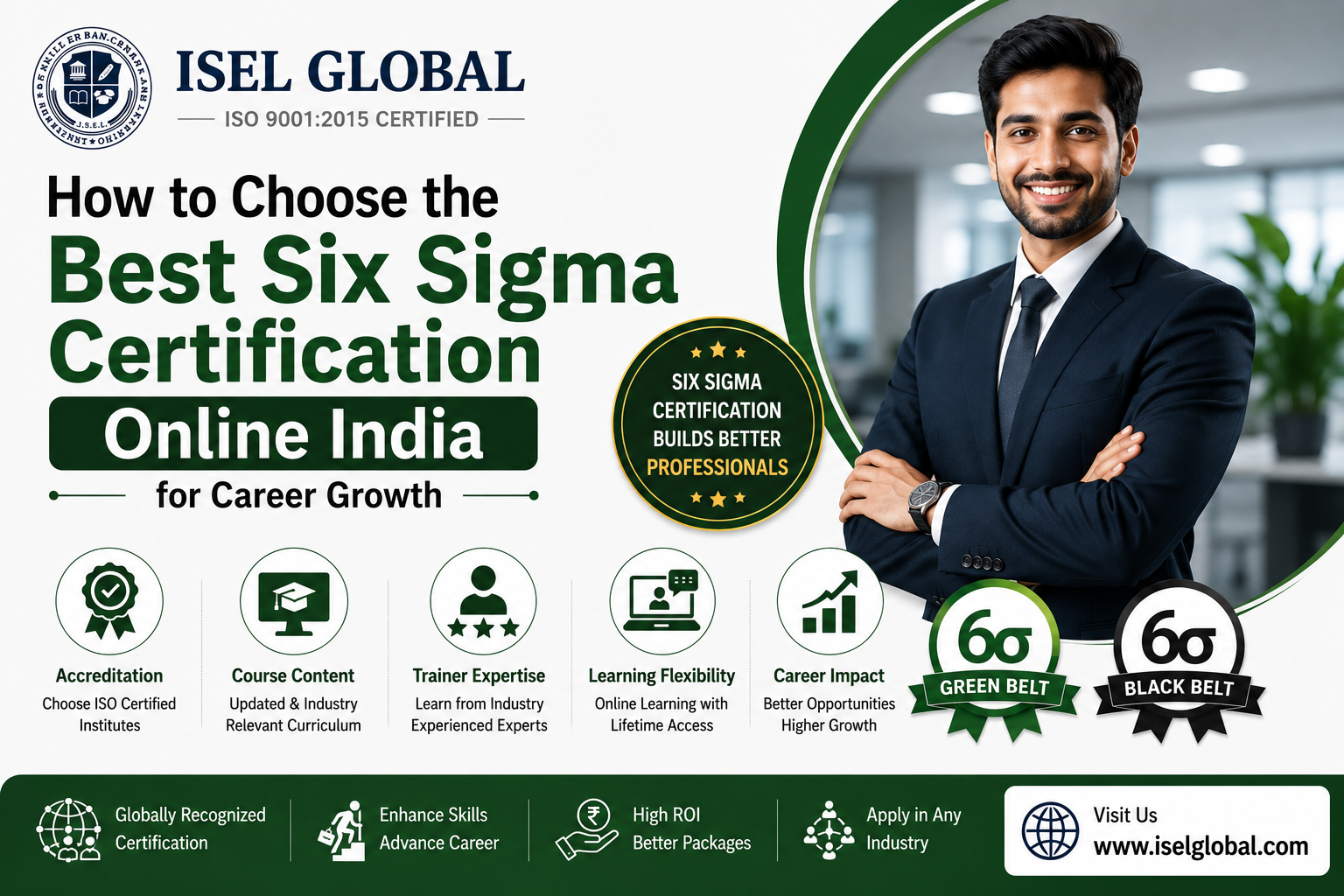
In today’s competitive job market, professionals are constantly looking for ways to improve their skills, increase earning potential, and stand out from other candidates. One of the most respected credentials across industries is Six Sigma certification.
Whether you work in manufacturing, IT, healthcare, project management, logistics, or business operations, pursuing a six sigma certification online India can significantly improve your career prospects. However, with numerous training providers, certification levels, and learning formats available, choosing the right program can be challenging.
This guide explains everything you need to know about selecting the best Six Sigma certification for your career goals in 2026.
Answer: Six Sigma certification online India is a professional training program that teaches process improvement, quality management, data-driven decision-making, and operational excellence through flexible online learning.
Six Sigma is a globally recognized methodology used to reduce defects, improve efficiency, and enhance business performance. Organizations across industries use Six Sigma principles to streamline operations and improve customer satisfaction.
Online certification programs allow professionals and students to gain these skills without disrupting their work schedules.
Popular certification levels include:
Answer: Six Sigma certification remains valuable because organizations increasingly rely on data-driven process improvement, automation, quality management, and operational excellence to remain competitive.
Several industry trends are driving demand:
Companies are actively seeking professionals who can identify inefficiencies, reduce costs, and improve productivity.
Answer: Green Belt focuses on project participation and process improvement fundamentals, while Black Belt develops leadership skills for managing complex improvement projects and organizational transformation.
| Feature | Lean Six Sigma Green Belt | Six Sigma Black Belt |
| Experience Required | Beginner to Intermediate | Intermediate to Advanced |
| Project Complexity | Moderate | High |
| Leadership Responsibility | Team Member | Project Leader |
| Statistical Tools | Basic to Intermediate | Advanced |
| Career Level | Entry/Mid-Level | Senior Professional |
| Training Duration | Shorter | More Extensive |
| Salary Potential | Higher than non-certified peers | Significantly higher |
| Ideal For | Engineers, Analysts, Supervisors | Managers, Consultants, Leaders |
Professionals new to process improvement often start with a six sigma green belt before pursuing advanced certifications.
Answer: Lean Six Sigma Green Belt is ideal for professionals who want to learn structured problem-solving, process improvement, and quality management techniques.
Suitable candidates include:
A lean six sigma green belt certification provides a strong foundation for career growth and future Black Belt training.
Answer: Black Belt certification is best suited for experienced professionals who lead teams, manage projects, and drive organizational improvement initiatives.
Ideal candidates include:
Professionals seeking leadership positions often choose black belt certification to demonstrate advanced expertise.
Answer: The best certification depends on your career goals, experience level, industry requirements, curriculum quality, and accreditation standards.
Consider the following factors:
Ask yourself:
Your objectives should guide the certification level you choose.
A quality program should include:
Look for programs aligned with globally recognized frameworks such as:
Industry-recognized certifications improve employer confidence.
Experienced trainers bring practical insights from real-world projects, helping learners understand how Six Sigma principles are applied in business environments.
The best programs include:
Practical application improves learning outcomes.
Online learning should provide:
This flexibility is particularly important for working professionals.
Answer: Six Sigma certification develops analytical, leadership, quality management, and problem-solving skills that are valuable across industries.
Key skills include:
Learn how to identify inefficiencies and optimize workflows.
Use data to make informed business decisions.
Identify underlying causes of recurring problems.
Plan, execute, and monitor improvement projects.
Reduce operational risks and quality failures.
Lead cross-functional teams and improvement initiatives.
Most quality lean six sigma certification programs include:
Advanced six sigma black belt certification programs include additional statistical and leadership modules.
Answer: Six Sigma-certified professionals can pursue roles in quality management, operations, project management, consulting, and business excellence.
Popular job roles include:
Demand continues to grow across multiple sectors.
Organizations across sectors value Six Sigma expertise.
Professionals pursuing six sigma certification in Mumbai and six sigma black belt certification in Bangalore often find strong demand due to the concentration of manufacturing and technology companies.
Answer: Six Sigma-certified professionals generally earn higher salaries because they contribute directly to business efficiency and cost reduction.
Approximate salary ranges:
| Certification Level | Typical Salary Range |
| Green Belt | ₹5–12 LPA |
| Black Belt | ₹10–25 LPA |
| Senior Black Belt | ₹20–40+ LPA |
Actual compensation varies based on industry, experience, location, and project success.
Avoid these common mistakes:
Low-cost programs may lack practical training and industry recognition.
A certification should align with your long-term objectives.
Industry recognition matters when applying for jobs.
Practical projects significantly increase the value of certification.
Choose a level appropriate to your experience and responsibilities.
To maximize certification value:
Employers value demonstrated results more than certificates alone.
Answer: Yes. Six Sigma certification remains one of the most respected professional credentials for process improvement, quality management, and operational excellence.
Benefits include:
For professionals seeking long-term career growth, Six Sigma remains a worthwhile investment.
Choosing the right six sigma certification online India depends on your career goals, experience level, and desired industry path. Professionals beginning their journey often benefit from a lean six sigma green belt, while experienced leaders may gain greater value from a six sigma black belt certification.
The most effective programs combine industry-recognized curriculum, experienced instructors, practical projects, and flexible online learning. As organizations continue to prioritize efficiency, quality, and continuous improvement in 2026, Six Sigma-certified professionals will remain in high demand.
If you’re ready to accelerate your career, explore ISEL Global’s industry-focused Lean Six Sigma certification programs and take the next step toward professional excellence.
Lean Six Sigma Green Belt is generally the best starting point. It provides foundational knowledge of process improvement, quality management, and problem-solving without requiring extensive prior experience.
Yes. Six Sigma methodologies are widely adopted across global organizations, making certification valuable in multiple countries and industries.
Most online Green Belt programs can be completed within a few weeks to a few months, depending on learning pace and program structure.
Absolutely. IT professionals use Six Sigma to improve software development processes, service delivery, operational efficiency, and project outcomes.
Lean focuses on eliminating waste and improving workflow efficiency, while Six Sigma focuses on reducing defects and process variation. Combined, they create a powerful improvement methodology.
Black Belt certification is more advanced than Green Belt and requires deeper understanding of statistics, project leadership, and process improvement techniques.
Yes. Employers often prefer candidates with Six Sigma credentials because they demonstrate analytical thinking, leadership, and continuous improvement expertise.
Yes. Students can gain valuable skills and improve employability by earning Green Belt certification before entering the workforce.
Manufacturing, IT, healthcare, logistics, finance, consulting, telecommunications, and retail industries actively hire Six Sigma professionals.
A high-quality online certification from a reputable provider can offer comparable value, especially when it includes practical projects and expert-led instruction.