New
C3S Business School
- CALLE LONDRES, 6, PORTA 9, BARCELONA
- 34 931 168 821
Strategies, Reviews & Tools For Small Business
A plant manager once told me his team spent three weeks chasing a defect that kept returning. Everyone had a theory, and nobody had data. Then a trained six sigma black belt joined, mapped the process, measured the variation, and found the cause in two days.
That is the real value of this role. A Black Belt replaces opinions with evidence and leads people through change. This guide explains how they do it and what it takes to become one.
A Six Sigma Black Belt is a trained process-improvement leader who uses data and statistical tools to reduce defects, cut waste, and improve quality. They lead cross-functional projects, coach Green Belts, and connect improvement work directly to business results such as cost, speed, and customer satisfaction.
Most Black Belts work with the DMAIC method: Define, Measure, Analyze, Improve, Control. Many also apply Lean principles, which is why you will often see the combined term lean six sigma in job descriptions.
Organizations need people who can fix recurring problems permanently instead of patching them. A Black Belt reduces variation, lowers the cost of poor quality, and builds a repeatable improvement habit. In 2026, with tighter margins and more automation, data-driven decision making is a core skill, not a bonus.
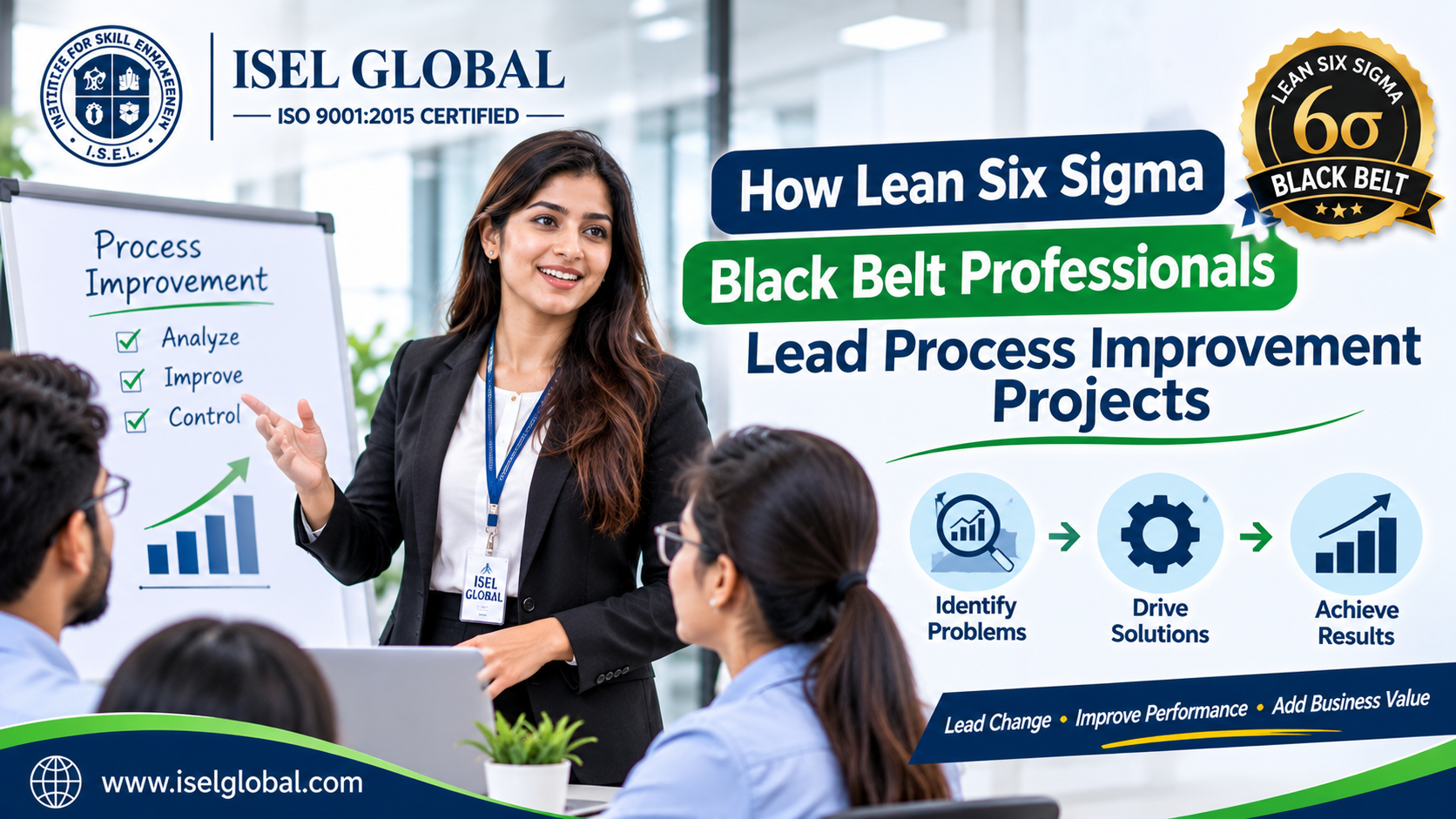
A Black Belt leads a project by following DMAIC: defining the problem, measuring current performance, analyzing root causes, testing solutions, and putting controls in place. They also manage stakeholders, timelines, and team members, so success depends on leadership as much as statistics.
Here is how the steps work in practice:
Example: A logistics company has a 9% late-delivery rate. The Black Belt maps the dispatch process and finds that most delays start at one loading stage. A revised scheduling rule cuts late deliveries sharply, and a control chart keeps the result visible.
Quality engineers, manufacturing professionals, IT and operations specialists, project managers, and business leaders benefit most. Students with a technical background can start earlier through a Green Belt. Experience with process or data work helps, though requirements differ by certifying body.
Many people begin with Lean Six Sigma Green Belt Training before moving up. A six sigma green belt gives you the vocabulary and basic tools first.
A typical six sigma black belt course covers DMAIC in depth, along with Lean tools, statistical process control, regression, and a real improvement project. Candidates preparing on their own often add a six sigma book or a six sigma ebook for extra practice.
Common roles include Process Excellence Manager, Continuous Improvement Lead, Quality Manager, Operations Excellence Consultant, and Transformation Lead. With experience, some professionals advance to master black belt positions, where they mentor Black Belts and shape company-wide strategy. A six sigma master black belt often owns the entire improvement program.
Salaries vary widely by city, industry, and experience. In India, Black Belt roles are commonly reported in the range of roughly ₹10–25 lakh per year, and senior roles pay more. Verify current figures on salary portals before making decisions.
Industries hiring include manufacturing, automotive, IT services, banking, healthcare, logistics, telecom, and e-commerce. In 2026, many employers also expect Black Belts to work with analytics dashboards and automation data.
Yes, for most professionals who want leadership roles in quality, operations, or transformation. The credential is most valuable when paired with a completed project and real results. If your work never touches process or data, the return will be lower.
The best certification is accredited, includes a live project, and is respected by employers in your industry. Compare curriculum depth, trainer experience, exam format, and support. If you are comparing the best six sigma black belt certification in india, look at those factors, not price alone.
Options include a six sigma black belt certification or a lean six sigma black belt certification. Location can matter for classroom learners, for example six sigma black belt certification in Bangalore or six sigma certification in Mumbai. Working professionals often prefer six sigma certification online India.
A six sigma black belt does more than run statistics. They lead people, solve root causes, and prove results with data. If you want a credential that builds both technical skill and leadership, this path is worth serious consideration.
Ready to start? Explore ISEL Global’s certification programs and find the level that fits your career.