
New
Derma Laser Center
- 2239 Whitehorse Mercerville Rd, Hamilton Township, NJ 08619, United States
Strategies, Reviews & Tools For Small Business
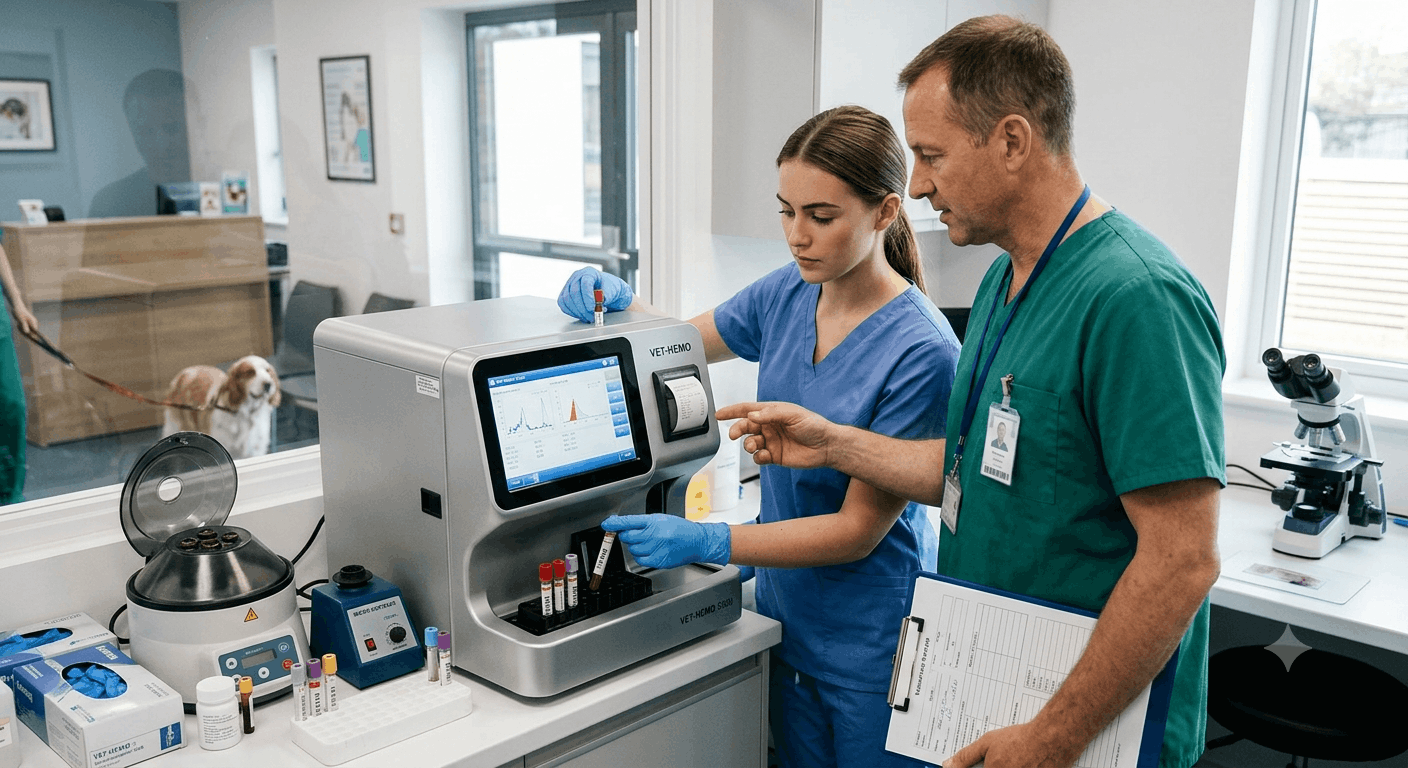
In modern veterinary medicine, rapid and accurate diagnostic capabilities are no longer a luxury—they are an essential pillar of patient care. As pet owners increasingly view their animals as core family members, expectations for fast, comprehensive diagnostic testing have risen dramatically. Veterinary clinics and reference laboratories face constant pressure to deliver accurate complete blood count (CBC) results within minutes to guide urgent clinical decisions. Modern veterinary hematology analyzers sit at the center of this transition, enabling veterinary teams to shift from basic qualitative assessments to high-precision cellular profiling right at the point of care.
The commercial landscape reflects this growing demand for sophisticated diagnostic infrastructure. According to a market report on veterinary hematology analyzers, the global market was valued at $0.96 billion in 2024, projected to grow from $1.03 billion in 2025 to $1.74 billion by 2035 at a compound annual growth rate (CAGR) of 5.4%. This sustained expansion highlights a broader trend: veterinary practices worldwide are actively investing in robust in-house testing equipment to optimize clinical workflows, retain diagnostic revenues, and elevate the overall standard of patient care.
To appreciate the impact of modern diagnostic systems, it helps to understand the technological journey of blood analysis tools. Early veterinary testing relied heavily on manual blood smears, microhematocrit centrifuges, and basic impedance counters originally calibrated for human blood. These methods were labor-intensive and struggled to accommodate the diverse cell morphology found across different species, such as the unique microcytic erythrocytes of felines or nucleated red blood cells present in avian and reptilian patients.
Today’s benchtop systems utilize multi-angle laser flow cytometry, fluorescent staining, and advanced impedance technology to deliver detailed cellular differentials. Laser flow cytometry measures light scatter at multiple angles to evaluate internal cellular complexity, nuclear lobulation, and cell size simultaneously. This multidimensional profiling allows clinicians to distinguish mature neutrophils from band cells, identify eosinophils accurately, and detect subtle reticulocyte variations that indicate early regenerative bone marrow responses.
Furthermore, software algorithms now feature species-specific gating mechanisms. Rather than applying a single analytical template, these devices adjust their analytical parameters depending on whether the sample originates from a canine, feline, equine, or exotic patient. This species-tailored approach minimizes false flags, reduces the necessity of manual slide reviews, and helps veterinary staff maintain high throughput without compromising analytical integrity.
Integrating automated hematology platforms into daily clinical practice addresses several key operational bottlenecks. Traditional reliance on off-site commercial laboratories often introduces delay, with turnaround times ranging from 12 to 24 hours. In emergency scenarios—such as acute internal hemorrhage, severe immune-mediated hemolytic anemia, or toxicities—waiting hours for baseline CBC data introduces significant clinical risk. Point-of-care analyzers yield actionable results in under five minutes, allowing immediate stabilization and targeted therapeutic interventions.
From an administrative perspective, modern devices integrate seamlessly with Practice Management Information Systems (PIMS). Automated data transmission eliminates manual entry errors, ensures proper patient record alignment, and instantly posts billing charges to the client’s account. When reviewing practice growth strategies, practice managers frequently analyze local commercial networks through an express business directory to locate local diagnostic suppliers, equipment service providers, and specialized technical support required to maintain critical benchtop instruments.
In addition to workflow efficiency, in-house testing improves client compliance and satisfaction. Pet owners appreciate receiving real-time diagnostic explanations during their appointment rather than via follow-up phone calls days later. Visual graphs, cytograms, and trend lines generated by modern analyzer software provide clear visual aids that help veterinarians explain complex conditions—such as systemic inflammation, infection, or platelet disorders—fostering trust and immediate treatment plan buy-in.
Selecting the right diagnostic analyzer requires balancing practical operational needs with technical capability. Practices must evaluate several critical factors:
Sample Volume Requirements: Small animal and exotic practices benefit significantly from micro-sample capabilities, requiring as little as 20–50 microliters of whole blood to prevent iatrogenic anemia in delicate patients.
Reagent Stability and Management: On-board reagent tracking, automatic fluidic cleaning cycles, and reasonable shelf lives reduce wastage and lower per-test operational costs.
Multi-Species Flexibility: Mixed-animal practices require systems pre-programmed with extensive species profiles, including livestock and wildlife parameters.
Maintenance and Calibration: Automated self-checks and remote diagnostic monitoring by equipment manufacturers reduce unexpected downtime and simplify routine maintenance routines.
While modern automated systems provide extraordinary speed and detail, intelligent clinical utilization requires an understanding of their operational limitations. Automated counters can occasionally misinterpret abnormal cell structures. For example, feline platelets are notoriously prone to clumping during venipuncture, which can cause automated counters to falsely record severe thrombocytopenia. Similarly, giant platelets or nucleated red blood cells can skew total white blood cell counts if the instrument’s gating software fails to differentiate them.
To maintain diagnostic accuracy, regulatory frameworks established by organizations like the U.S. Food and Drug Administration (FDA) emphasize strict quality control protocols and validation standards for veterinary medical devices and in-vitro diagnostics. Incorporating daily quality control (QC) runs using commercial control samples ensures the instrument remains within established calibration ranges.
Furthermore, automated analyzers should complement—not entirely replace—manual microscopic evaluation. When an analyzer flags abnormal cell populations, nucleated red blood cells, or atypical slide differentials, a trained technician or veterinarian must perform a manual blood smear review. Combining high-throughput automated screening with selective manual verification creates a robust, multi-layered quality assurance framework that protects patient safety.