
New
How to Select the Best Digital Marketing Course in Lucknow After 12th or Graduation?
- 2nd, Vipul Khand 3, Vipul Khand, Gomti Nagar, Lucknow, Uttar Pradesh 226010
- 09305111875
Strategies, Reviews & Tools For Small Business
Over the past few decades, huge strides and developments have been made in the treatment of infertility and the way assisted reproductive technology (ART), in-vitro fertilization (IVF), reproductive endocrinology and clinical embryology approaches this issue. The need for fertility services continues to grow and the needs of the skilled medical practitioner with knowledge, clinical expertise and experience to provide services for complex cases of infertility is also increasing. One of the most serious issues of reproductive medicine nowadays is that the skills learned by the certificate are far from the skills taught during a proper medical education. While a few short-term courses or certificate courses may give healthcare professionals an introduction to the world of infertility treatment, some do not always provide the amount of clinical experience and training necessary for them to deal with the work of infertility on their own. To help meet this demand, there will be a growing emphasis on competency and medical organization, and the supervised clinical experience will be enhanced.
Infertility is a complex medical disorder and needs an entire approach for diagnosis, investigation and therapy. Treatment of an infertile couple involves an understanding of the reproductive anatomy, the interactions of hormones, and the role of the ovum, male factor infertility, ultrasound evaluation, ovulation induction, intrauterine insemination (IUI) and potential problems with fertility treatment. Each patient is unique with his or her medical history and reproductive problems and clinical decisions must be made on a patient-by-patient basis.
In 1990s, there have been increasing number of training programmes in infertility, but there is very much variation in level and quality of education offered by various institutions.
The basic certification programs are an integral part of a medical practitioner’s induction to his specialty. They can help doctors to familiarize themselves with the fundamentals of fertility management, understand the terminology of reproductive medicine and gain an insight into the options for treatment. But a certificate isn’t an indication that an individual can do their job effectively.
More advanced medical education, standardized. A well defined and structured curriculum and learning goals, assessment of academic performance, hands-on experience and opportunity to learn the skills and attributes required for clinical practice with the senior faculty.
The key differences are in the depth of theoretical knowledge as well as opportunities to observe and to participate in clinical procedures and evaluation of practical skills. A simple certificate will be used to show the learner has finished a Course but a structured fellowship will be used to test the learner’s knowledge and competencies that are expected to be shown at the level of the Programme.
This distinction is important in reproductive medicine and directly affects the safety of the patient, the success of treatment, patient satisfaction and cost.
IVF Fellowship is the compulsory clinical training to build up clinical skills.
The IVF Fellowship is an all-inclusive training course for doctors looking to augment their skills and knowledge in the field of reproductive medicine. A good fellowship should be academic, case-based, simulation-based, clinical observation, supervised procedural exposure and assessment and should be more structured than programmes that focus more on the theory part of the fellowship.
An IVF course embarked in an appropriate IVF Fellowship allows the development of detailed knowledge of procedures involved in ovarian stimulation, monitoring the follicles, obtaining of eggs, transfer of embryo, coordination in the lab, development of embryo and management of IVF associated complications.
Interpretation of findings and clinical decision making, based on the individual patient is also a very important skill. It is important for the doctor to be aware of the rationale behind the recommended treatment, when it should be modified and how to discuss the realistic expectations and potential outcomes with the patient.
A fellowship also offers the fellow a chance to gain an understanding of the multi-disciplinary approach to fertility treatment. Care of IVF patients is reliant on a good team effort among the fertility consultants, clinical embryologist, nurses, counsellor and laboratory staff. This is important to be aware of these inter-related responsibilities so that patients can be provided integrated care.
There should always be a connection to the exposure, the clinical responsibility (which is separate from the procedure), qualifications/competence of the learner, institutional procedures and regulatory requirements.
The cost of a Fellowship on Infertility.
The Fellowship in Infertility aims to enable the doctors to be more than just the basic doctors of reproductive medicine and provide a broader knowledge about the diagnosis and management of Infertility. It focuses on the development of a sound foundation of knowledge of reproductive endocrinology, female and male infertility, diagnosis investigation, treatment planning and assisted reproductive technologies.
Structured fellowship education is for doctors starting their career in the field of reproductive medicine, it enables them to relate theory to practice. They don’t only learn to carry out certain individual treatments, but also the meaning behind the various components of the treatment of infertility in the overall context of treatment.
The importance of medical education is fulfilled when the theoretical knowledge can be used in real clinical situation. Although a doctor may know the principles of ovarian stimulation from a book and in a real patient, he/she needs to be familiar with how a person’s hormones will react, what is seen on the ultrasound, specific risk factors and how treatment will need to be adjusted.
In the same manner, understanding of the theory behind oocyte removal or embryo transfer is very different from actually being present at the time of the procedure, feeling the need to know the machines used and learning of the duties of the clinical and laboratory staff members.
Also, through hands-on experience, the physicians will be able to acquire their clinical observation skills, comfort with procedure, communication skills and confidence in handling different patient scenarios.
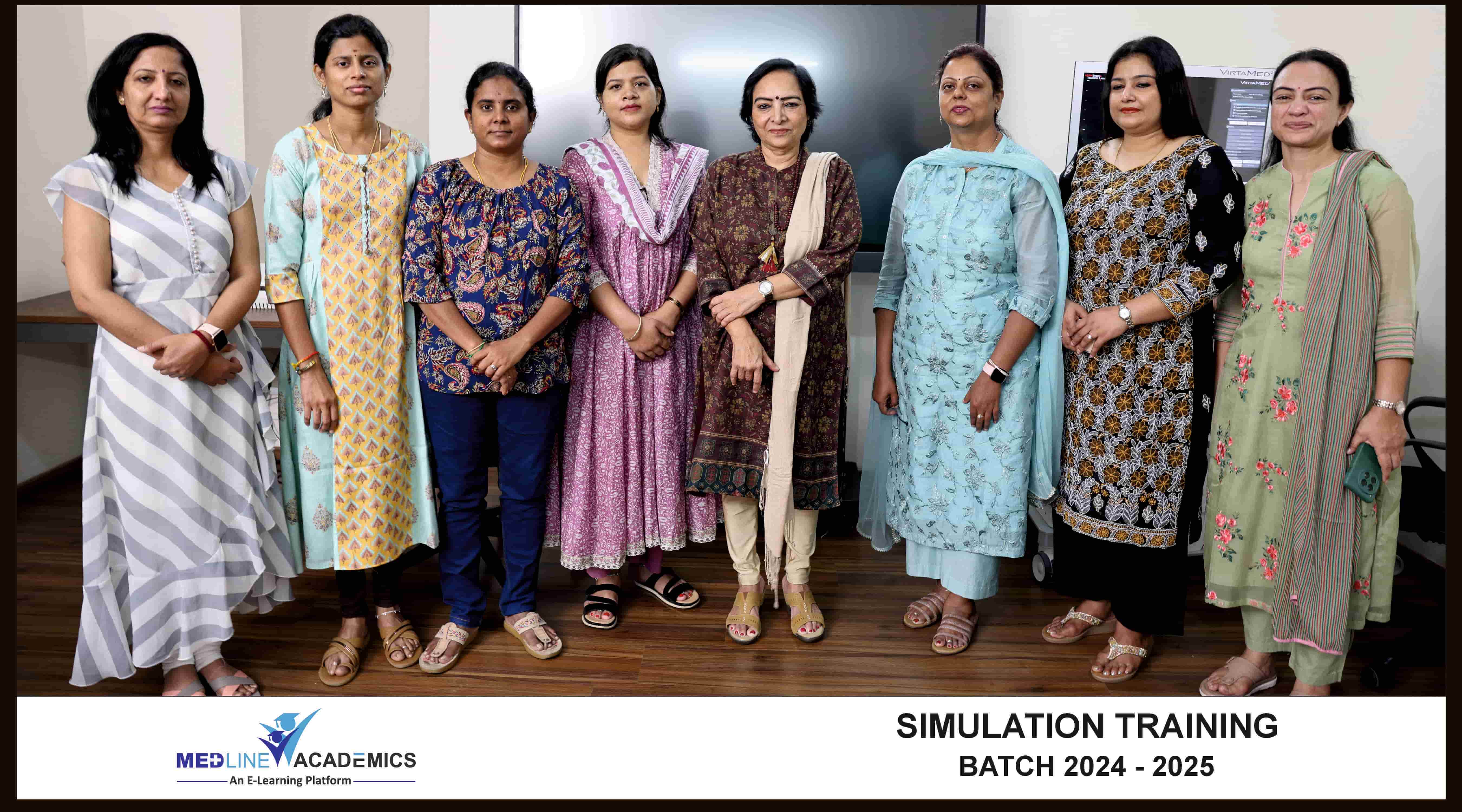
Another great asset is simulation-based training, which offers the opportunity to learn and practice procedural skills in a safe setting, prior to the clinical practice. It offers participants information about the equipment, develops their coordination and explains the procedure. It gives them the guidance of an expert.
In addition to simulation, clinical attachment is viewed as complementary to it to provide learners with the real-life context they would see in hospitals. Helps them to value the patient registration, consultation, investigations, treatment planning, OT co-ordination, working of Embryology lab and the follow-up.
Finally, certification should be employed to indicate completion of a worthwhile learning experience and not be mistaken for a certificate of competency.
Reproductive Medicine is one of the fields that progresses rapidly. Advances in technology, research, clinical guidelines and treatment methods continue to impact the management of infertility. Hence, the importance of experiential learning by the experienced faculty members in the medical education is significant in the context of standard medical education.
Through faculty mentorship, students can learn the “how” and “why” of medical treatment, not just the “what to do”.
Medline Academics offers academic sessions and learning activities, conducted by experts, where participants can interact with experienced professionals and enhance their knowledge of reproductive medicine.
Dr. Kamini Rao Hospitals is a clinical excellence patient-centred fertility care.
The concepts of medical education and clinical practice go hand in hand and are closely interlinked. The leadership and educational context of a well-established and best infertility centre in Bangalore is an important place to learn about the application of academic knowledge to the provision of a full service to patients.
Dr. Kamini Rao Hospitals is known for its long-standing association and services rendered to women’s health care and reproductive medicine and works on the treatment of fertility issues in a multidisciplinary approach. Under the banner “Menarche to Menopause and Beyond”, the hospital covers the women’s health care needs at every stage of life.
Dr. Kamini Rao Hospitals is a center that embodies the fusion of clinical expertise, cutting-edge reproductive technologies, patient counseling, and compassionate care in healthcare.
The hospital’s expertise in reproductive medicine further underscores the importance of having skilled individuals ensuring the quality of the reproductive medicine service. Coordinated working is necessary between highly trained professionals at every stage of fertility discussions, investigations, treatment planning and even during IVF treatment.
Medline Academics and Dr. Kamini Rao Hospitals have tied up for providing both academic and practical training, while also providing fertility care.
While choosing the right program, doctors have to check importantly few things like cost, recognition, mode of conducting classes, whether the certificate provided is university affiliated one. Also one needs to check if its of hybrid or offline program and classes are conducted by experienced faculty where students are also exposed to practical training along with simulation and clinical attachment ensuring transparency in assessment.