


New
Crossroads Treatment Centers
- 200 E. Broad St #300, Greenville, SC 29601, USA
- (855) 694-8288
Strategies, Reviews & Tools For Small Business
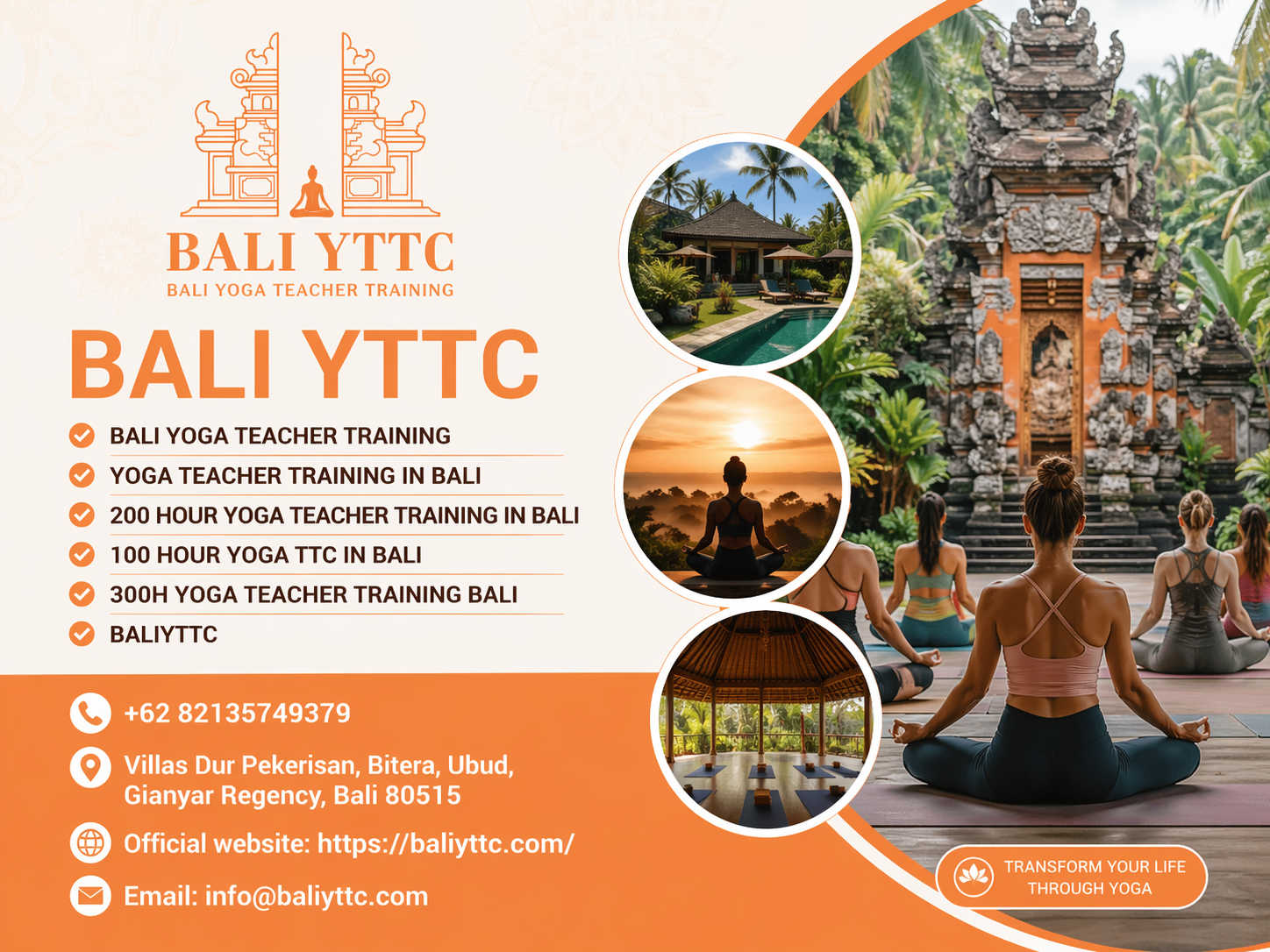
There’s a reason Bali is called the “Island of the Gods.” With its misty volcanoes, emerald rice terraces, and spiritual heartbeat, it has become the world’s most sought-after destination for yoga teacher training. And at the center of this movement is the 200-hour yoga teacher training in Bali—a foundational course that transforms not just your practice, but your entire outlook on life.
Whether you dream of teaching sun salutations on a tropical beach or simply want to deepen your personal practice, this training offers a unique blend of ancient wisdom, modern anatomy, and soulful community. But with so many schools claiming to be the best, how do you choose? And what does the journey really entail?
Let’s roll out the mat and explore everything you need to know.
Bali isn’t just a pretty postcard. It’s a living, breathing yoga hub. Ubud, in particular, is the epicenter, where the air smells of frangipani and incense, and the sound of gamelan music mingles with morning chants.
Choosing a 200-hour yoga teacher training in Bali means you’re not stuck in a sterile studio. You’ll practice in open-air pavilions overlooking jungles, hear the rain on palm leaves during meditation, and sip coconut water after a grueling arm balance session. The island’s energy is naturally conducive to introspection and growth—exactly what you need when you’re unlearning old patterns and embodying the role of a teacher.
Moreover, Bali offers affordability without compromising quality. Compared to trainings in the US, UK, or Australia, you get world-class instruction, organic meals, and accommodation at a fraction of the cost. That’s why students from over 50 countries fly here every year.
Standardized by Yoga Alliance, a 200-hour course is the entry-level certification to teach yoga globally. But in Bali, expect a richer, more immersive curriculum:
Asana Lab (100 hours): Detailed breakdown of 50+ poses, including alignment, modifications, and hands-on adjustments. You’ll learn how to prevent injuries and adapt poses for different bodies.
Pranayama & Meditation (25 hours): Breathing techniques like Nadi Shodhana, Kapalabhati, and guided mindfulness practices rooted in Balinese Hindu traditions.
Yoga Philosophy & Ethics (30 hours): Study of the Yoga Sutras of Patanjali, Bhagavad Gita, and the Yamas/Niyamas, with practical applications for modern life.
Anatomy & Physiology (20 hours): Functional anatomy, the subtle body (chakras, nadis, koshas), and how to sequence safely for common ailments.
Teaching Methodology (25 hours): How to cue, demo, adjust, build a class theme, and manage energy as a teacher. You’ll practice-teach from week one.
Most Balinese trainings weave in unique extras: mantra chanting, Kirtan, Balinese offerings (canang sari), and even excursions to holy water temples or silent retreats.
Let’s be honest—your first week might be overwhelming. Your hips will ache. Your mind will resist sitting still for 20 minutes of meditation. You might question why you ever thought living on a vegan diet and waking up at 6 AM was a good idea.
But then something shifts.
Around day 10, you’ll assist a fellow student in Triangle Pose without even thinking. Your morning chants will stop feeling silly and start feeling like a homecoming. During a silent walk through the rice fields, you’ll suddenly understand Santosha (contentment) not as a concept, but as a felt truth.
One of my fellow trainees, Sarah, came to Bali after a corporate burnout. She could barely touch her toes. By graduation day, she not only led a 60-minute Vinyasa flow with confidence but also cried happy tears during our final circle because she finally felt enough. That’s the kind of transformation a 200-hour yoga teacher training in Bali offers—not just flexible hamstrings, but a flexible heart.
With over 200 registered yoga schools in Bali, here’s how to avoid the wrong fit:
Check Yoga Alliance Registration: Ensure the school is RYT-200 certified. This guarantees international recognition.
Read Recent Reviews (not just testimonials on their site): Look at Google Maps, YogaTrail, and Facebook groups. Pay attention to comments about accommodation quality, food, and teacher availability.
Understand the Style: Do you want dynamic Power Yoga, slow Hatha, alignment-based Iyengar, or spiritual Sivananda? Ubud has everything.
Ask About Class Size: Ideal is 12–20 students. More than 25 and you won’t get personal adjustments.
Look for Cultural Integration: The best trainings include Balinese offerings, temple cleansings, or local language basics. It shows respect for the host culture.
Pro tip: Avoid any school that promises “become a master in 3 weeks” or doesn’t provide a clear daily schedule. Authentic training requires discipline and depth.
Most 200-hour courses run over 22–26 days (with one day off per week). A typical day in Bali looks like this:
06:30 – 07:30 – Morning meditation & pranayama
07:30 – 09:00 – Asana practice (Vinyasa/Hatha)
09:00 – 10:00 – Breakfast & free time
10:00 – 13:00 – Philosophy & anatomy lecture
13:00 – 15:00 – Lunch & rest (pool, nap, study)
15:00 – 17:00 – Teaching methodology & practice teaching
17:00 – 18:30 – Evening restorative or yin yoga
19:00 – 20:00 – Dinner
20:00 – 21:00 – Kirtan, group sharing, or self-study
Sundays are usually free to explore waterfalls, visit Ubud market, or get a Balinese massage.
Bring: 2-3 sets of breathable yoga clothes, a reusable water bottle, mosquito repellent (natural), a journal, earplugs (roosters wake up early!), and an open mind.
Leave: Heavy expectations, noisy gadgets (leave the laptop if possible), and synthetic fabrics that don’t breathe in humidity.
Most schools provide mats and blocks, but if you have a favorite mat, bring it.
Short answer: Yes—if you’re ready to do the inner work.
This is not a vacation. It’s a transformational intensive. You will confront your limitations, your ego, and maybe your fear of public speaking. But on the other side is a community of lifelong friends, a certification that allows you to teach anywhere in the world, and a renewed sense of purpose.
Many graduates return home to start their own classes, lead retreats, or simply teach free community sessions. Others never teach publicly—but they say the training deepened their personal practice more than ten years of drop-in classes ever could.
The jungle is calling. The gongs are about to sound. And somewhere in a shala overlooking the Ayung River, a space is waiting for you.
A 200-hour yoga teacher training in Bali is more than a certificate on your wall. It’s a rite of passage. You’ll leave with stronger arms, a quieter mind, and the tools to hold space for others—all while having eaten the best dragon fruit smoothie bowls of your life.
Ready to say yes to yourself? Research schools, check dates, and book that flight. The hardest part is not the chaturanga—it’s deciding to begin.