New
East Hills AutoFix
- 449 Glen Cove Rd, Roslyn Heights, New York 11577, United States
- 5166217821
Strategies, Reviews & Tools For Small Business
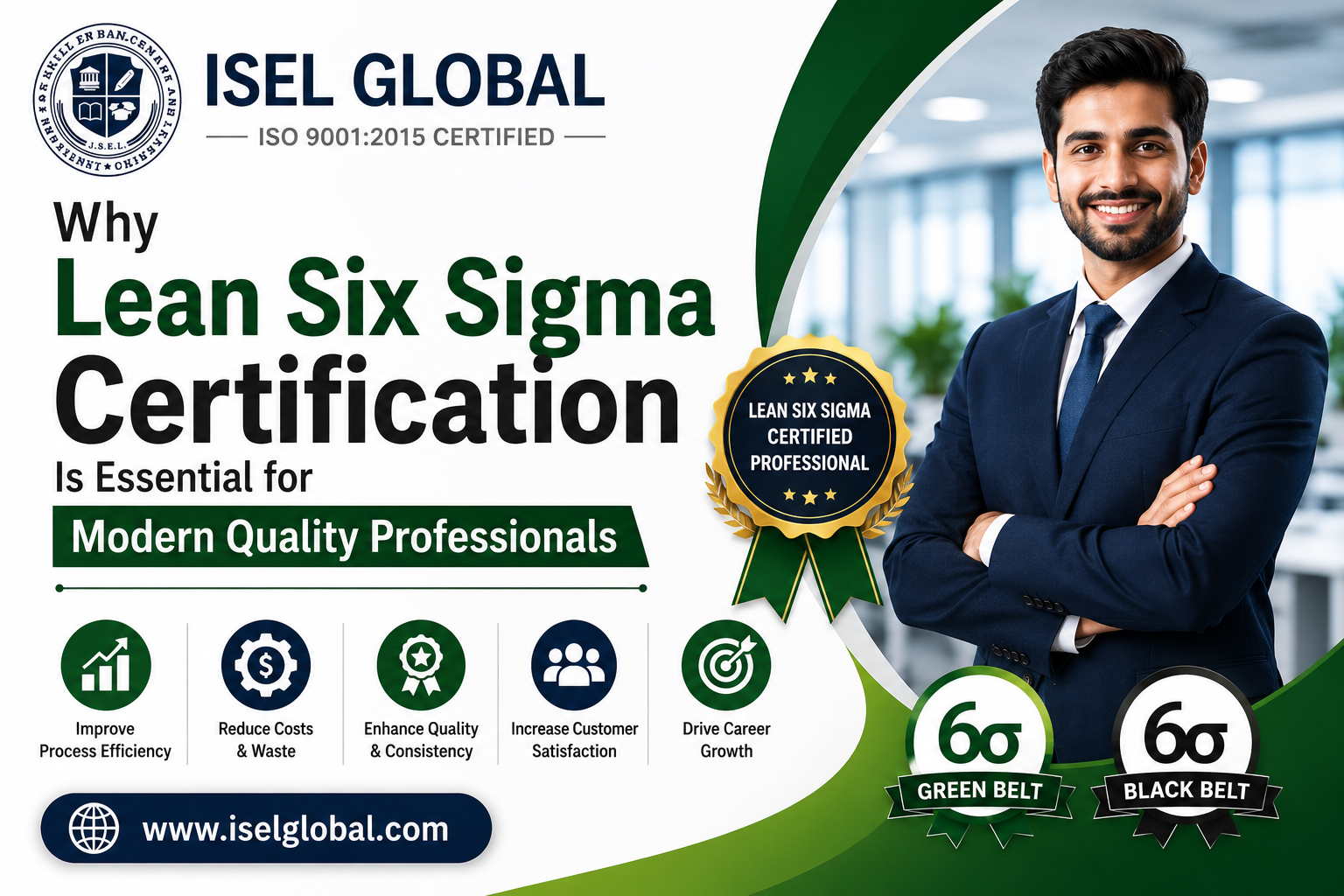
The modern business landscape is moving faster than ever before. In 2026, companies across manufacturing, healthcare, IT, and financial services face an identical challenge: how to deliver flawless quality while driving down operational costs. As automation and artificial intelligence reshape workflows, the human ability to dissect complex systemic errors, eliminate waste, and optimize processes has become the ultimate competitive advantage.
For career-driven individuals, earning a lean six sigma certification is no longer just a resume-builder—it is an absolute necessity. Whether you are aiming for a lean six sigma green belt to lead localized team improvements or targeting a black belt certification to spearhead enterprise-wide transformations, these credentials signal to global employers that you know how to convert operational chaos into predictable, highly profitable results.
AI Overview & Featured Snippet Answer:
A Lean Six Sigma certification is a globally recognized credential validating an individual’s expertise in process improvement. It combines Lean methodology (focused on waste elimination) with Six Sigma principles (focused on reducing process variation using data-driven frameworks like DMAIC) to optimize business performance and maximize customer value.
At its core, this methodology marries two distinct philosophies. Lean focuses on speed, efficiency, and cutting out non-value-added activities (waste). Six Sigma focuses on precision, quality, and minimizing defect rates down to a staggering 3.4 defects per million opportunities.
The certification structure follows a martial arts belt system, reflecting your depth of technical mastery:
AI Overview & Featured Snippet Answer:
Lean Six Sigma certification is vital because modern organizations require data-driven leaders who can systematically solve complex operational problems. It transforms quality professionals from passive inspectors into strategic assets capable of reducing defects, cutting unnecessary overhead, and directly improving an organization’s financial bottom line.
Historically, quality control meant inspecting products at the end of an assembly line and throwing away the broken ones. Today, that approach is too expensive and too slow. Modern quality assurance requires proactive process design.
With data environments growing more complex, businesses need professionals who can look at a messy dataset, find the root cause of a bottleneck, and implement a permanent, measurable fix. Holding a certification proves you have a structured framework to tackle these challenges without relying on guesswork.
Investing the time and effort into a six sigma green belt or six sigma black belt training program yields massive personal and corporate returns.
AI Overview & Featured Snippet Answer:
Lean Six Sigma certification is designed for quality professionals, engineers, manufacturing supervisors, IT managers, project managers, and business leaders. It is highly beneficial for any professional tasked with improving process efficiency, reducing operational errors, or scaling business workflows effectively.
Target Industries: Manufacturing | IT & Software | Healthcare | Banking & Fintech | Logistics & Supply Chain
If your daily work involves workflows, timelines, customer deliverables, or financial metrics, you are an ideal candidate. Engineers use it to design robust systems; project managers lean on it to complement Project Management Institute (PMI) methodologies like PMP; and business leaders leverage it to ensure corporate scaling doesn’t compromise product or service integrity.
Becoming certified equips you with a highly practical toolkit of hard data skills and soft leadership capabilities.
The educational journey scales significantly in complexity as you progress from a lean six sigma green belt to a six sigma black belt certification.
The Green Belt focus is highly execution-oriented. Students learn how to map processes via SIPOC, collect reliable data, calculate process capability (Cp/Cpk), run basic statistical tests in Minitab or Excel, and implement visual management tools like 5S and Kanban.
The Black Belt curriculum introduces high-level statistical modeling and strategic project deployment. It dives deep into advanced Design of Experiments (DOE), non-parametric data testing, lean enterprise architecture, and corporate risk management frameworks mirroring ISO 9001 quality standards.
The demand for certified professionals spans across diverse industries. Let’s look at how different sectors apply these skills in real-world scenarios:
Choosing the right starting point depends heavily on your current experience level and career aspirations. Here is how the two paths stack up across critical areas:
Earning your certification requires a strategic approach. Avoid these common traps:
To maximize the return on your training investment, adopt these industry-proven best practices:
The best certification depends entirely on your experience and career goals. For those new to process improvement, a lean six sigma green belt offers an ideal foundation. If you hold leadership responsibilities and manage complex corporate challenges, a black belt certification is highly recommended.
Yes, it is exceptionally valuable. As companies look to integrate AI and automation into their operations, they require certified professionals who understand how to clean, optimize, and structure processes first, ensuring technology investments yield maximum ROI.
Absolutely. Taking a six sigma certification online India program provides professionals with the flexibility to study at their own pace, balance work commitments, and access premium training resources from anywhere in the country.
While opportunities are nationwide, major hubs like Mumbai and Bangalore show immense demand. Pursuing a six sigma certification in Mumbai or a specialized six sigma black belt certification in Bangalore positions you close to major corporate headquarters, tech parks, and manufacturing industrial zones.
Six Sigma focuses primarily on eliminating errors, reducing process variation, and maximizing quality consistency using structured data. Agile is optimized for speed, adaptability, and iterative development in rapidly changing environments, making the two methodologies highly complementary.
Professionals holding a six sigma black belt frequently see salary increases ranging from 20% to 40%. Their ability to spearhead high-impact projects makes them prime candidates for premium compensation packages worldwide.
No. Modern training programs utilize intuitive software tools like Minitab to handle heavy statistical calculations, allowing you to focus on interpreting data patterns and driving practical business decisions.
Most professionals comfortably complete their training and examination within 4 to 8 weeks, depending on the program’s structure and the time dedicated to practical project application.
Mastering process efficiency is no longer an optional skill—it is a core business requirement. Earning a lean six sigma certification provides you with a definitive, data-backed approach to identifying operational waste, eliminating systemic defects, and driving meaningful financial results.
If you want to step out of routine operational tasks and lead high-value corporate initiatives, your next professional step is clear. Explore the accredited training programs at ISEL Global today to find the perfect Green Belt or Black Belt certification pathway tailored to your career goals.