New
Skills Development Network
- 1st Floor, Bhive Premium, 48, Church Street, Bengaluru – 560 001 Karnataka
Strategies, Reviews & Tools For Small Business
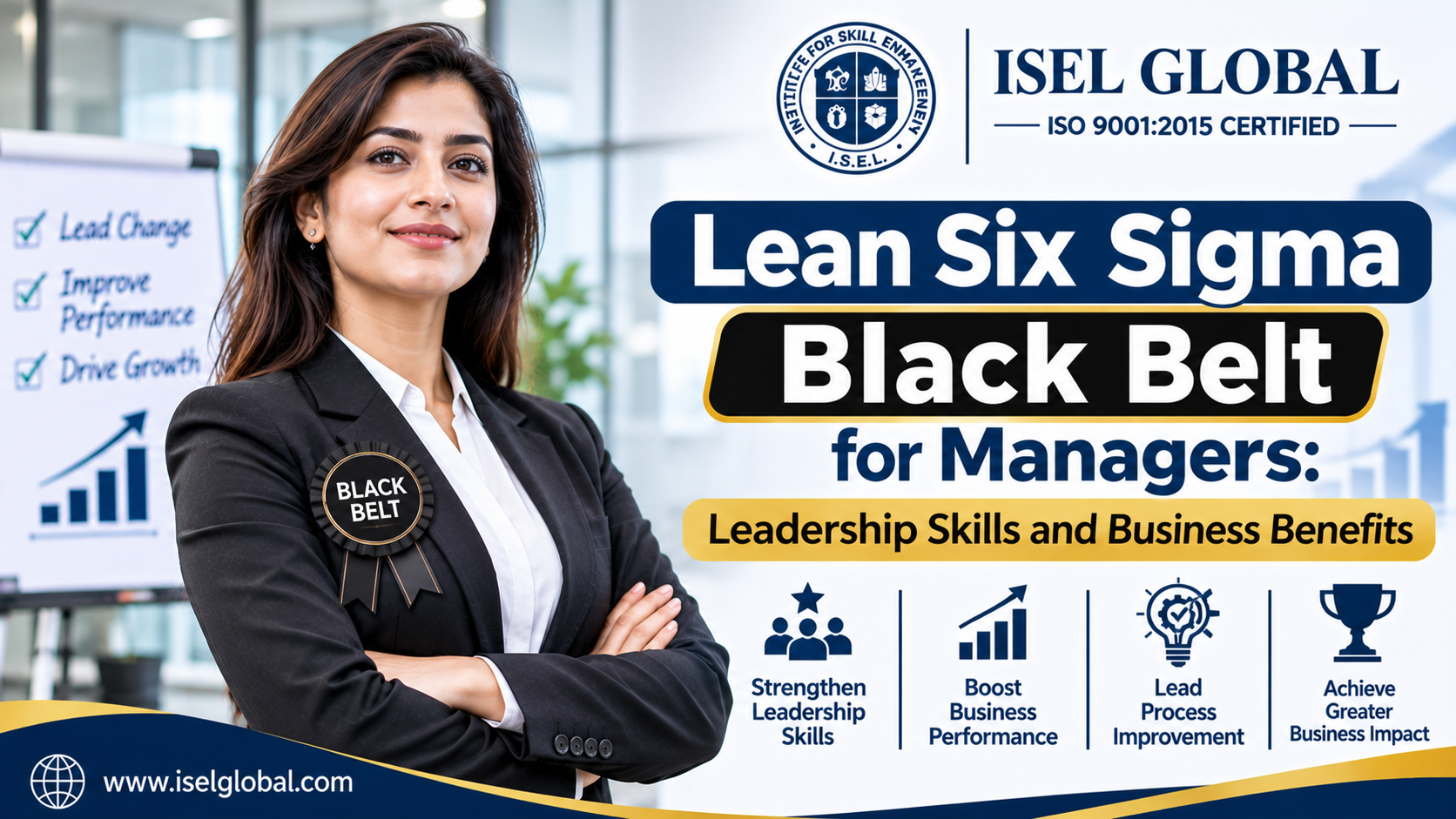
Modern managers are expected to do more than supervise daily operations. They must improve productivity, manage costs, solve complex business problems and help teams achieve measurable results. As organisations become more focused on efficiency and customer satisfaction, process improvement has become an important management responsibility.
A Six Sigma Black Belt qualification can help managers develop the analytical and leadership skills required to meet these expectations. It teaches professionals how to identify process problems, understand performance data, reduce errors and lead improvement projects across departments.
For working professionals, engineers, quality specialists, project managers and business leaders, learning Lean Six Sigma can be a practical step towards stronger decision-making and career development. In 2027, managers who can combine people management with structured process improvement may have an advantage in organisations where operational performance matters.
ISEL Global offers certification learning pathways for professionals who want to build their process improvement knowledge and apply it in real business situations.
Six Sigma Black Belt certification is an advanced professional qualification focused on process improvement, data-based problem-solving and project leadership. It helps professionals use structured methods to identify the causes of business problems, reduce process variation and improve operational performance.
A Black Belt professional generally understands the DMAIC framework: Define, Measure, Analyse, Improve and Control. Managers can use this approach to guide improvement projects, coordinate teams and monitor results.
Unlike basic quality training, a six sigma black belt course focuses on applying improvement tools to complex business challenges. It may cover process mapping, root cause analysis, statistical concepts, project management and performance measurement.
Managers who already understand quality fundamentals may consider advanced black belt certification to strengthen their ability to lead organisation-wide improvement initiatives.
Managers often deal with recurring issues such as delayed projects, inconsistent service quality, high operating costs and inefficient workflows. Without a structured approach, teams may spend time addressing symptoms instead of identifying the actual causes.
Six Sigma gives managers a systematic way to investigate these problems. For example, a manufacturing manager may use process data to understand why product defects are increasing. An IT manager may examine recurring software delivery delays, while a service manager may study customer complaints and waiting times.
A lean six sigma black belt professional can help teams:
The combination of Six Sigma and black belt knowledge can help managers connect operational improvements with wider business objectives.
Managers regularly make decisions that affect budgets, teams, customers and business performance. Six Sigma encourages them to examine facts and process data before choosing a solution.
Instead of relying only on assumptions, managers can compare performance indicators, investigate variations and evaluate whether an improvement has delivered the expected result.
Improvement projects usually involve people from different departments. Managers must communicate objectives, assign responsibilities and help employees work towards shared targets.
A lean six sigma black belt professional learns how to guide teams through structured projects while keeping attention on measurable outcomes.
Unnecessary activities, rework, defects and delays increase operating costs. Lean Six Sigma methods help managers identify these sources of waste and improve the way work is completed.
For example, a service organisation may reduce repeated data entry by reviewing its workflow and removing unnecessary steps.
Customers expect reliable products, timely services and consistent experiences. By improving process quality, managers can help reduce errors, delays and complaints.
Black Belt knowledge supports project planning, problem analysis, implementation and performance monitoring. Managers can use these skills to keep improvement projects focused on business priorities.
A Black Belt programme can be relevant to professionals who have experience with business processes, quality improvement or project responsibilities. It may be particularly useful for:
Professionals who are new to the methodology may first explore a six sigma green belt or lean six sigma green belt learning pathway before moving towards advanced project leadership.
A structured lean six sigma certification programme can help managers develop technical and professional capabilities.
Important learning areas may include:
These skills can support managers who want to improve operational performance while developing a more analytical leadership approach.
A six sigma black belt certification programme generally covers advanced process improvement concepts. The exact curriculum and assessment requirements depend on the training provider.
Common topics include:
Professionals who have completed Lean Six Sigma Green Belt Training may already understand basic improvement concepts. Advanced learning can help them develop the confidence to lead larger projects and work with more complex business challenges.
A recognised qualification, relevant experience and the ability to demonstrate project results can support career development. A black belt certification credential may be useful when applying for roles that involve process excellence, operational performance and quality management.
Possible career paths include:
Professionals may also progress towards a master black belt pathway as they gain experience in leading and mentoring improvement projects. A six sigma master black belt role generally involves advanced methodology knowledge, coaching and strategic improvement responsibilities.
Certification alone does not guarantee a particular job title or promotion. Employers also consider professional experience, leadership ability, industry knowledge and demonstrated project outcomes.
Salary opportunities for Black Belt professionals vary by location, industry, experience, employer and project responsibility. Professionals working in manufacturing, consulting, healthcare, IT, logistics and financial services may encounter different compensation structures.
Managers who can demonstrate measurable achievements—such as reducing defects, improving delivery times or lowering process costs—can present stronger evidence of their contribution during performance reviews and job applications.
Rather than choosing a qualification based only on salary expectations, professionals should consider how they can apply the learning to real projects and build a portfolio of results.
Process improvement is relevant across industries where organisations need consistent quality, efficient operations and customer satisfaction.
The methods learned through Lean Six Sigma can be adapted to different business environments, depending on the process and improvement objective.
Before selecting a training provider, managers should compare the course structure, learning support and practical relevance. The best six sigma black belt certification in india for an individual is one that matches their experience, career goals and learning requirements.
Consider these points:
Professionals exploring six sigma certification in india can compare available programmes based on these factors rather than relying only on promotional claims.
For location-based learning searches, professionals may also explore six sigma certification in Mumbai or six sigma black belt certification in Bangalore. Those who need flexibility alongside work responsibilities can review six sigma certification online India options.
ISEL Global provides learning pathways for professionals interested in Lean Six Sigma and advanced Black Belt development. You can explore its lean six sigma black belt certification programme to understand the available learning option.
Even trained professionals can face challenges when applying process improvement methods. Some common mistakes include:
Managers should involve the people who perform the process every day. Their feedback can reveal problems that may not be visible in reports or dashboards.
Managers can make improvement initiatives more effective by following a few practical habits:
These practices help turn training concepts into everyday management capabilities.
Professional learning should continue beyond a certification programme. Managers can strengthen their understanding by reviewing case studies, process improvement examples and practical learning material.
A useful six sigma book can provide explanations of quality concepts and improvement tools, while a six sigma ebook may offer convenient access to learning material during a busy work schedule. Professionals looking for digital study resources can explore the ISEL Global e-books collection.
Those who want to build foundational knowledge can also explore Lean Six Sigma certification and the available Six Sigma Green Belt and Lean Six Sigma Green Belt learning pathways before progressing to advanced study.
A Six Sigma Black Belt helps managers develop advanced process improvement and problem-solving skills. It focuses on analysing business processes, reducing errors, improving efficiency and leading structured projects. Managers can apply these methods to operational challenges, customer service, manufacturing, IT and other business functions where measurable improvements are important.
Yes. It can be useful for managers who lead teams, handle operational challenges or work on quality improvement projects. The methodology provides a structured way to investigate problems and measure results. Its practical value depends on how effectively a manager applies the concepts to real workplace situations.
Eligibility requirements vary by training provider. Many programmes are suitable for working professionals, engineers, quality specialists, project managers and team leaders. Some advanced programmes may recommend prior knowledge of Green Belt concepts or practical experience with process improvement. Review the provider’s requirements before enrolling.
Green Belt learning generally introduces process improvement tools and prepares professionals to contribute to improvement projects. Black Belt learning goes deeper into analysis, project leadership and complex problem-solving. The appropriate level depends on a person’s experience, responsibilities and career goals.
Many professionals choose online learning because it can fit around work and personal commitments. Before enrolling, review the course format, trainer support, assessment method, learning resources and certification requirements. You should also check whether the programme provides opportunities to understand practical applications.
Possible career paths include Quality Manager, Process Improvement Manager, Operational Excellence Manager, Continuous Improvement Manager and Lean Six Sigma Consultant. Actual opportunities depend on experience, industry knowledge, leadership skills and the ability to demonstrate successful improvement projects.
Yes. Six Sigma methods can be applied beyond manufacturing. IT and service professionals may use process mapping, root cause analysis and performance measurement to investigate delivery delays, recurring errors, service issues and inefficient workflows.
A Master Black Belt pathway may be a suitable next step for experienced professionals who want to develop advanced expertise. Such roles commonly involve mentoring other practitioners, guiding improvement programmes and supporting organisation-wide process excellence. Entry requirements and expectations vary between providers.
Compare the syllabus, trainer expertise, course format, assessment requirements, learner support and practical relevance. Check whether the programme matches your current knowledge and career objectives. Avoid selecting a course based only on claims about guaranteed promotions or salary increases.
No certification can guarantee a salary increase. Career and salary outcomes depend on work experience, industry, location, employer requirements and practical achievements. Applying the methodology successfully and demonstrating measurable business results can strengthen a professional’s career profile.