New
Data Science Course in pune
- A Wing, 5th Floor, Office No 119, Shreenath Plaza, Dnyaneshwar Paduka Chowk Pune
- 020 7117 7359
Strategies, Reviews & Tools For Small Business
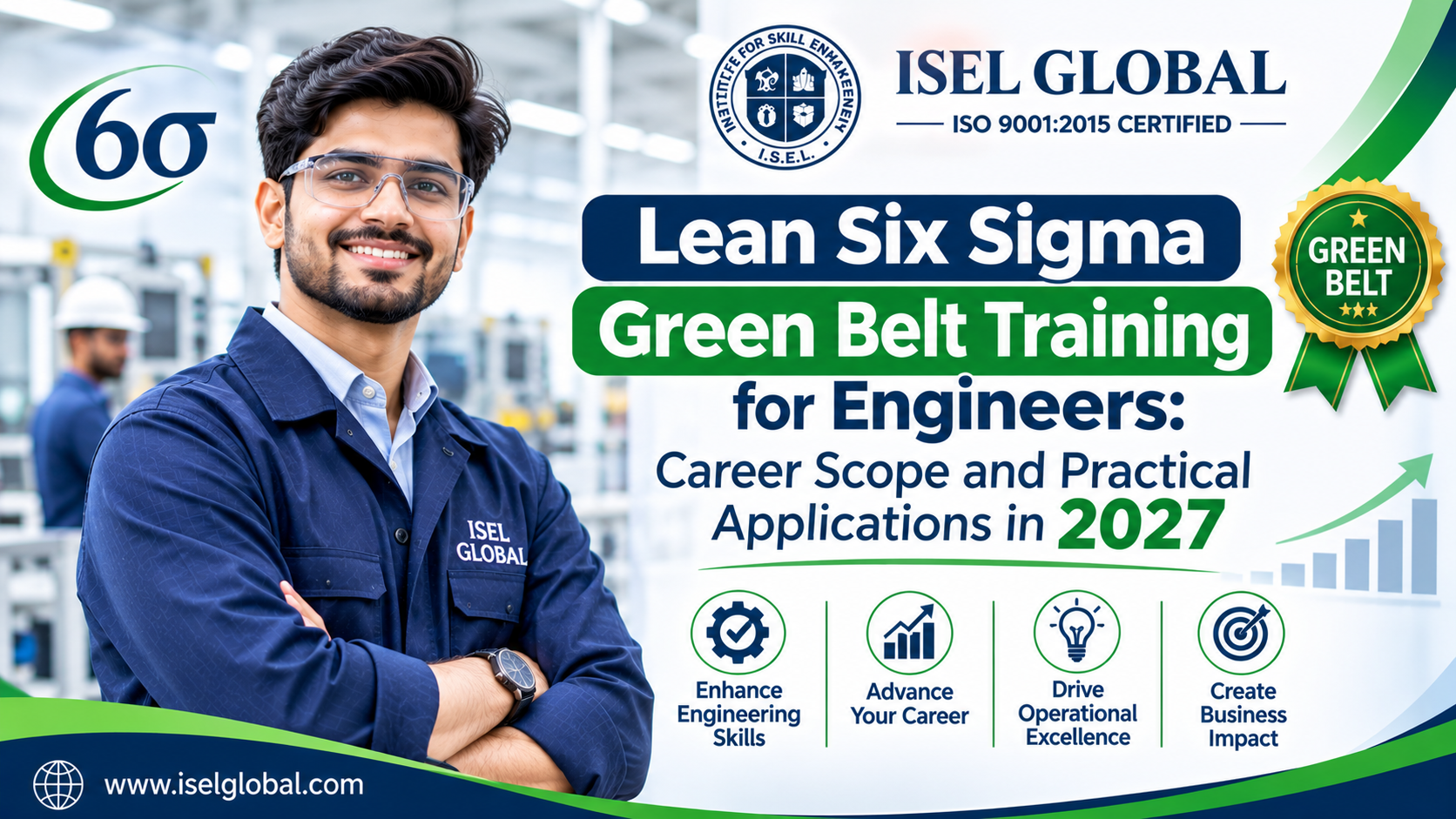
Engineering careers are evolving as organisations focus more on productivity, automation, quality management and operational efficiency. In 2027, engineers will need more than technical knowledge to solve complex workplace challenges. They will also need the ability to analyse processes, reduce waste and improve business performance. This is where Lean Six Sigma Green Belt Training becomes valuable.
Whether you work in manufacturing, mechanical engineering, electrical engineering, IT or quality management, learning process improvement techniques can strengthen your professional skills. ISEL Global helps professionals explore structured Six Sigma certification programmes designed to develop practical knowledge of quality management and continuous improvement.
Lean Six Sigma Green Belt Training is a professional learning programme that teaches individuals how to identify process inefficiencies, reduce defects and improve operational performance using structured methodologies.
It combines Lean principles, which focus on eliminating waste, with Six Sigma techniques, which aim to reduce process variation and improve quality.
The training introduces the DMAIC methodology:
For engineers, these techniques provide a practical framework for solving production, quality and operational challenges.
In 2027, engineering professionals will increasingly work alongside automated systems, digital manufacturing platforms and data-driven operational teams. Understanding process improvement can help them contribute beyond their traditional technical responsibilities.
For example, a manufacturing engineer may notice repeated production delays. Instead of immediately increasing manpower or machine capacity, the engineer can analyse downtime records, identify bottlenecks and implement corrective measures.
Some important applications include:
Learning lean six sigma methods helps engineers connect technical knowledge with measurable business improvements.
A professional lean six sigma certification can help engineers develop capabilities that are useful across different industries.
Key benefits include:
Learn how to identify the root causes of operational problems rather than treating only their symptoms.
Understand how to reduce defects, control process variation and improve product consistency.
Identify unnecessary activities, production delays and resource wastage.
Develop the ability to analyse information and make improvement decisions based on evidence.
Build additional skills relevant to quality, production, manufacturing and operational excellence roles.
ISEL Global offers professionals an opportunity to explore certification pathways that support their learning and career development.
The programme is suitable for professionals who want to improve processes and develop practical quality management skills.
It is particularly relevant for:
Professionals already familiar with six sigma green belt concepts can further develop their knowledge through practical projects and advanced learning.
A structured Green Belt programme generally covers several important technical and analytical skills.
These skills help engineers understand why problems occur and how improvements can be maintained over time.
A comprehensive curriculum generally introduces the following subjects:
Professionals exploring six sigma certification should compare course curriculum, trainer experience, assessment methods and practical learning opportunities before selecting a programme.
ISEL Global provides certification programme information for learners interested in developing their Lean Six Sigma knowledge.
Lean Six Sigma methods are relevant to several engineering and business environments.
Manufacturing: Engineers use process analysis to reduce defects, improve production output and minimise material wastage.
Automotive: Quality teams apply improvement tools to reduce assembly errors and improve component reliability.
IT and Software: Teams can improve testing workflows, reduce recurring errors and streamline service delivery.
Healthcare: Process improvement can help reduce administrative delays and improve workflow efficiency.
Logistics: Professionals can analyse inventory management, warehouse operations and delivery processes.
For example, an automotive engineer can use Pareto analysis to identify the most frequent component defects and prioritise corrective actions.
Green Belt knowledge can support career development in several professional roles.
Possible career paths include:
Engineers who want to handle more complex improvement projects may progress towards six sigma black belt learning after developing suitable practical experience.
Professionals researching black belt certification should understand the difference between Green Belt and Black Belt responsibilities before choosing their next qualification.
Salary opportunities depend on experience, technical expertise, industry, job location and the ability to demonstrate measurable improvements. There is no guaranteed salary associated with Green Belt certification.
Engineers can strengthen their career prospects by combining certification with practical achievements such as reducing production rejection rates, improving machine utilisation or lowering operational costs.
Professionals exploring six sigma certification in india should focus on programmes that develop applicable workplace skills rather than choosing a qualification based only on promotional salary claims.
The right qualification depends on professional experience and career objectives.
Green Belt is suitable for professionals who want to participate in improvement projects and develop structured problem-solving skills. Advanced professionals may explore six sigma black belt certification or a six sigma black belt course to develop expertise in managing more complex projects.
Learners comparing the best six sigma black belt certification in india should consider course content, practical project exposure, assessment methods and the credibility of the training provider.
ISEL Global offers certification programme options for professionals interested in progressing through different levels of Lean Six Sigma learning.
Engineers can also explore lean six sigma black belt learning and lean six sigma black belt certification as part of their longer-term professional development.
For professionals comparing regional learning options, ISEL Global also provides programme information related to six sigma black belt certification in Bangalore and six sigma certification in Mumbai.
Those who prefer flexible learning can explore six sigma certification online India programmes.
Each certification level serves a different professional purpose.
Professionals interested in master black belt development or six sigma master black belt qualifications should consider their existing experience and long-term career objectives.
Understanding Six Sigma and black belt career pathways can help professionals choose the right learning progression.
Apart from structured training, professionals can use supplementary learning materials to understand Six Sigma concepts.
A useful six sigma book can provide additional explanations of process improvement tools, while a six sigma ebook can offer convenient digital learning and revision support.
These resources can complement formal training, but practical application remains important for developing professional expertise.
Even after completing training, professionals may struggle to implement improvements if they overlook basic project practices.
Common mistakes include:
Engineers should connect every improvement project with a clearly defined problem and measurable objective.
To achieve better results from Green Belt learning:
These practices help turn certification knowledge into practical workplace capabilities.
Engineering professionals in 2027 will benefit from combining technical expertise with analytical thinking, quality management and process improvement capabilities.
Lean Six Sigma Green Belt Training provides a structured approach to identifying inefficiencies, reducing defects and improving operational performance across industries.
Whether you are a fresh engineering graduate or an experienced working professional, developing these skills can help you contribute more effectively to organisational goals.
ISEL Global supports professionals interested in exploring Lean Six Sigma certification and developing their knowledge of continuous improvement.
Take the next step towards strengthening your engineering skills and building a career focused on quality, efficiency and professional growth.
Yes. It helps engineers develop practical skills in quality management, process improvement, root cause analysis and operational efficiency. These skills are relevant to manufacturing, automotive, IT, healthcare and logistics. In 2027, combining technical engineering knowledge with process improvement capabilities can help professionals contribute to business performance and continuous improvement projects.
Green Belt professionals generally participate in improvement projects and may lead smaller initiatives. Black Belt professionals develop advanced analytical and project leadership skills to manage more complex improvement activities. Both qualifications support process improvement, but their responsibilities and depth of knowledge differ.
Yes. Mechanical engineers can learn how to improve manufacturing processes, reduce equipment downtime, minimise material waste and control product defects. The techniques are particularly useful in automotive, production, maintenance and industrial engineering environments.
Green Belt is a suitable option for many professionals who want to understand process improvement and participate in structured projects. Beginners should compare course requirements, curriculum, practical exercises and certification assessment before enrolling.
No. Certification does not guarantee a promotion or salary increase. Compensation depends on experience, industry, job responsibilities and practical achievements. Demonstrating measurable improvements can help professionals strengthen their career profiles.
Yes. Online programmes allow working professionals to study with greater flexibility. Before choosing a programme, check the syllabus, trainer support, assessments, practical learning and certification requirements.
Possible roles include Quality Engineer, Production Engineer, Process Improvement Engineer, Manufacturing Engineer, Quality Assurance Executive and Operations Analyst. Actual opportunities depend on qualifications, experience and employer requirements.
Lean focuses on eliminating waste and improving process flow, while Six Sigma focuses on reducing variation and defects. Lean Six Sigma combines both approaches to improve quality, efficiency and overall process performance.
Yes, subject to the training provider’s eligibility requirements. It can help graduates understand quality management and problem-solving techniques. Internships and practical projects can further strengthen their knowledge.
After gaining relevant knowledge and practical experience, professionals can consider Black Belt and eventually Master Black Belt programmes. The right progression depends on career goals and the complexity of projects they want to manage.